The Presence that Moves
The Exodus is generally remembered as Israel’s great deliverance from Egypt. Pharaoh’s power is broken, the sea opens, and a nation of slaves walks out free. From the sea, Israel’s journey turns toward Sinai, where Yahweh brings the people to Himself and announces His intention to dwell among them. “Let them make Me a sanctuary, that I may dwell among them.” The God who brought Israel out of Pharaoh’s house is preparing to make His home in their midst.
The pattern reaches back to Genesis. Eden is the first sacred center, the place where God and humanity dwell together. Ezekiel describes it as the “holy mountain of God,” while Genesis pictures a river flowing from Eden to water the earth. Humanity bears God’s image within this sacred space, commissioned to extend His character and order into the world. God’s purpose was always Presence that expands.
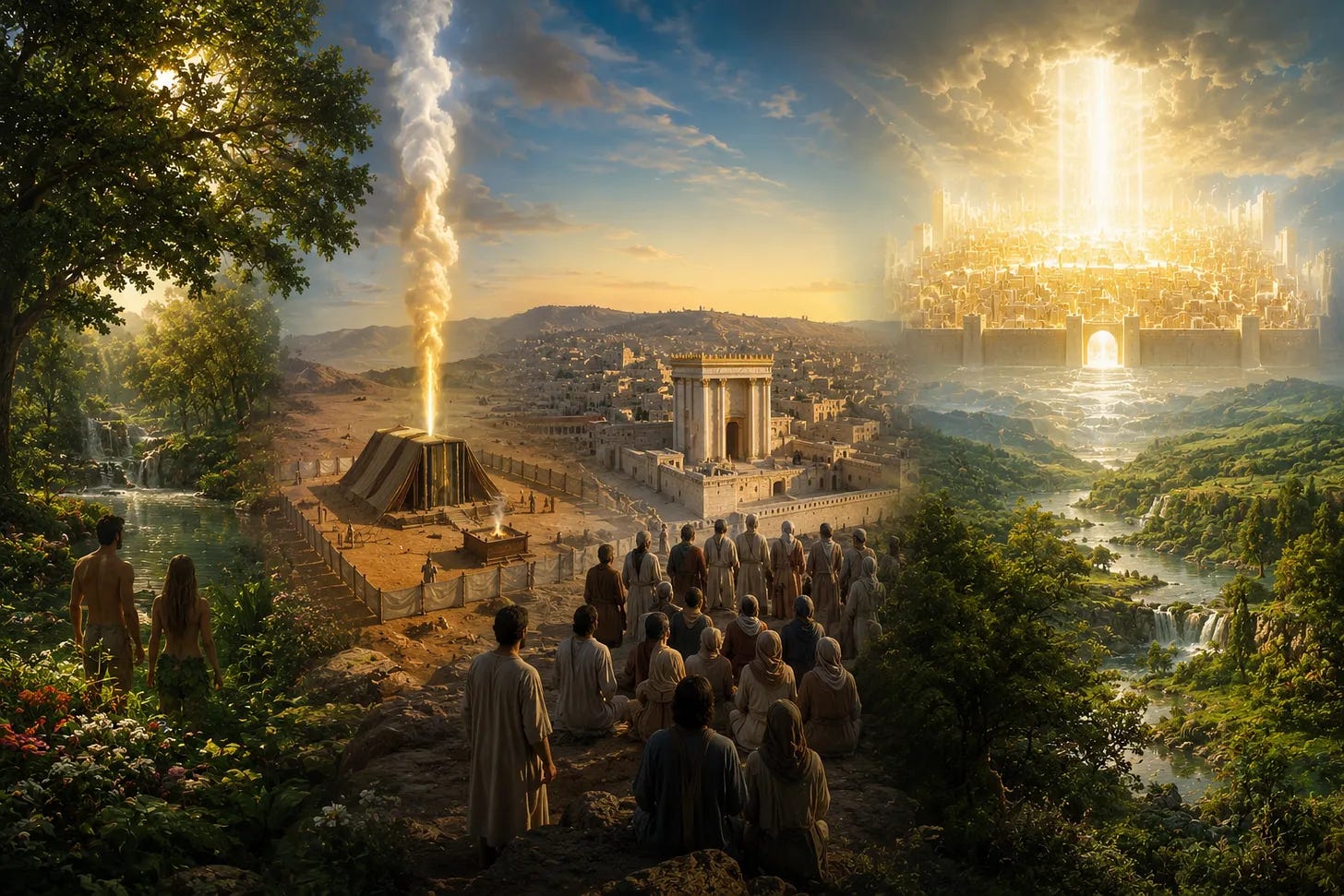
But Adam and Eve are driven out, cherubim guard the way back, and humanity loses access to the place where God walked among them. Rebellion produces an exile from Presence. Humanity moves away from the sacred center and into a world marked by disorder, violence, and death.
At Sinai, the direction changes.
For the ancient world, mountains carried a mystical meaning. They marked the meeting of heaven and earth, places where divine rule was revealed and where human beings approached sacred presence. Sinai becomes holy when Yahweh descends upon it. Its sanctity comes from His Presence, not from the mountain itself. Where Yahweh dwells, there is holiness.
Fire, cloud, smoke, thunder, trumpet blast, and earthquake announce His arrival. Moses ascends as Yahweh comes down. The God whose Presence was inaccessible after Eden now dwells in the midst of a redeemed people. At Sinai, He establishes His covenant and gives the Torah to order Israel’s life around His Presence. The Sea of Reeds marked their release from Pharaoh; Sinai establishes their life under the rule of Yahweh.
The Song of the Sea anticipated this: Israel would be brought to “the mountain of Your inheritance, the place, Lord, You made for Your dwelling.” The song culminates with, “Yahweh will reign forever and ever.” Mountain, sanctuary, Presence, and kingship converge. Israel is being led not simply to a land, but into the realm of the King.
Yet Israel cannot remain at Sinai. Boundaries surround the mountain, Moses alone ascends into the cloud, and their journey must continue.
So, the mountain presence will move with them.
Moses descends with the pattern for the Tabernacle, and when the sanctuary is completed, the glory that covered Sinai fills it. The Presence once manifested on the mountain now takes up residence in the center of Israel’s camp. Sinai has become portable.
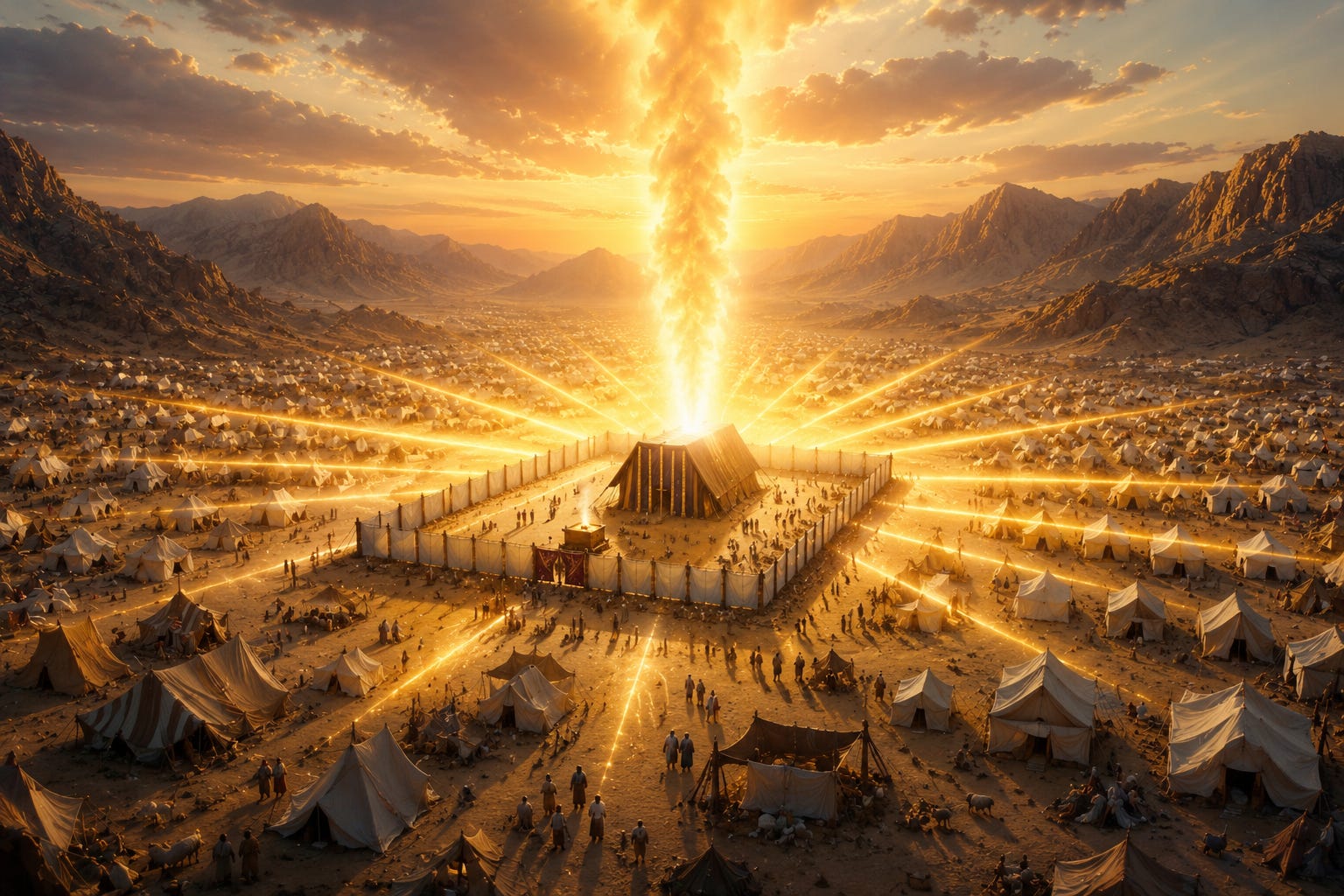
The Tabernacle carries the world of Eden into the wilderness. Its materials recall Eden’s abundance, its patterns of seven echo creation, and at its center rests the throne-Presence of Yahweh. In the midst of the wilderness stands a piece of ordered creation, with the tribes arranged around it. Israel’s life now has a sacred center: Yahweh dwelling among His people.
Israel is called a kingdom of priests, bearing Yahweh’s Name among the nations. The people who live around His dwelling are meant to carry His order and blessing beyond themselves. The movement first seen in Eden appears again: life flows outward from the Presence.
When the Tabernacle eventually gives way to the Temple, the imagery of the mountain settles upon Zion. Pilgrims ascend to Jerusalem to appear before the King, while the prophets look toward a day when the Presence will reach far beyond Israel. Isaiah sees the nations streaming toward the mountain of Yahweh as His instruction goes out from Zion.
The nations moving toward the Presence; the knowledge of God moving outward into the earth.
Israel’s long exile left the story unfinished. Even with the Temple rebuilt in Jerusalem, Israel still awaited Yahweh’s return to Zion and the restoration of His Presence among His people. The Gospel writers announce that return. Matthew names Him Immanuel—God with us. John declares that the Word became flesh and “dwelt” among us—unmistakably Tabernacle language. God has come down, and His dwelling is now embodied in Jesus the Messiah.
And the Presence now walks among His people.
In Jesus, the sacred center takes human form. What once flowed from God’s dwelling now appears wherever He goes: the unclean are restored, sins are forgiven, the broken are made whole, and divine instruction goes forth with authority. Heaven and earth meet again, not on a mountain or within a sanctuary, but in a Person.
Israel once camped tribe by tribe around the Tabernacle; now twelve disciples gather around Jesus. Renewed Israel is taking shape around the Presence of God in its midst.
After the resurrection and ascension, the Spirit descends upon the covenant community. The language once attached to sanctuary and Temple is now applied to a people who become the dwelling of God. His Presence is no longer identified with one mountain, one city, or one building. The Presence now moves outward through a people who bear the Spirit of the King.
The Tabernacle is moving through the wilderness once again.
If God dwells among us, His Presence must shape the life of those who surround Him. A community should bear the marks of His reign and make visible, however imperfectly, the restoration He intends for creation. We carry into the places of exile something of the sacred center from which we have come.
John sees the New Jerusalem descending from heaven and hears the announcement: “Behold, the dwelling place of God is with humanity.” There is no return to a garden enclosed somewhere in the world. The boundaries have disappeared. What was concentrated in Eden, manifested at Sinai, carried in the Tabernacle, established on Zion, embodied in Jesus, and entrusted to a Spirit-filled people now encompasses renewed creation.
Eden has filled the earth.
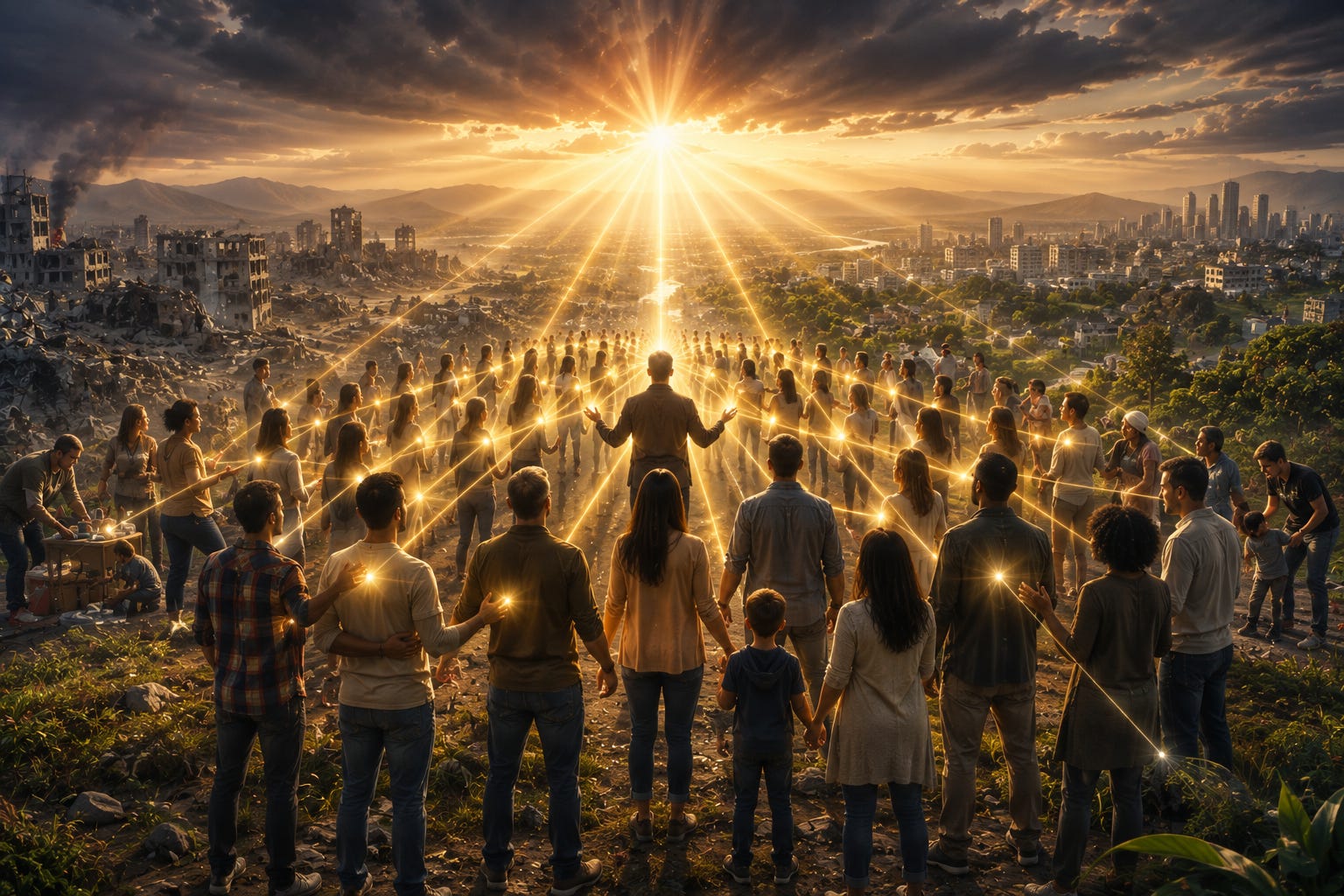
God rescues a people from bondage and draws them near so that His Presence might extend through them into the world. We cannot remain on the mountain. We come down bearing the character of the King we encountered there, carrying His life into places still marked by exile and disorder. The story that began with humanity driven from God’s Presence ends with His Presence filling all creation. Until that day, we are part of that movement.
How are you carrying His Presence into the world?
To access my books, articles, videos and courses click “start here”