When the Land Bears Witness
This week’s Torah portion, Nitzavim, opens with a declaration: “You are standing today, all of you, before Adonai your God.” The Hebrew word nitzavim, from the root natzav, means to be set, stationed, or established—to take one’s appointed position. Israel has reached the plains of Moab, and Moses gathers the entire covenant community before Adonai: chiefs, tribes, elders and officers, the men of Israel, their children and wives, the stranger in the camp, even the one who cuts wood and the one who draws water. Everyone has been summoned. Everyone has been placed in position.
And they stand at a threshold. Forty years of wilderness wandering lie behind them; the Jordan and the inheritance promised to Abraham lie ahead. Moses is preparing this generation to cross into the land. Before Israel crosses the Jordan, however, Israel must pass into covenant.
Moses says they have been assembled “that you may enter into the covenant of Adonai your God and into His oath.” The Hebrew verb translated “enter” is avar—to cross over or pass through. Israel stands before Adonai in order to pass through the covenant.
The language is suggestive of the ancient world of covenant making. The familiar Hebrew expression karat berit, “to make a covenant,” literally means to cut a covenant. In Genesis 15, Abraham cuts sacrificial animals and places the divided pieces opposite one another. Then the smoking firepot and flaming torch representing the divine Presence pass—avar—between them. Jeremiah 34 makes the meaning even clearer: men cut a calf in two and passed between its pieces as they entered an oath. The divided animal embodied the consequences of covenant violation. To pass between the pieces was to place oneself under the covenantal oath.
Israel stands before Adonai to avar into the covenant. Covenant creates a relationship of loyalty whose consequences reach into the life of the people and the land.
The verb avar also connects this generation to the Exodus. On the night of Passover, Adonai declared, “I will pass through—avarti—the land of Egypt.” He moved through Pharaoh’s realm in judgment while Israel’s blood-marked houses were protected. Israel then passed through the sea, leaving Pharaoh’s dominion behind. Forty years later, another body of water stands before them, and they are about to avar across the Jordan.
The pattern seems clear. Israel passes out of Egypt, through the wilderness, into covenant and across the Jordan. Each crossing marks movement from one realm into another until the redeemed people are established in the place Adonai promised to give them. Moses explains that purpose: Adonai is establishing them as His people. The God who brought them out has stationed them before Himself and is preparing to plant them in their inheritance.
Then Moses expands the horizon beyond those assembled on the plains of Moab: “Neither with you only do I cut this covenant and this oath, but with him who stands here with us today before Adonai our God, and with him who is not here with us today.” The choices made by those standing today shape the inheritance of those who will stand tomorrow.
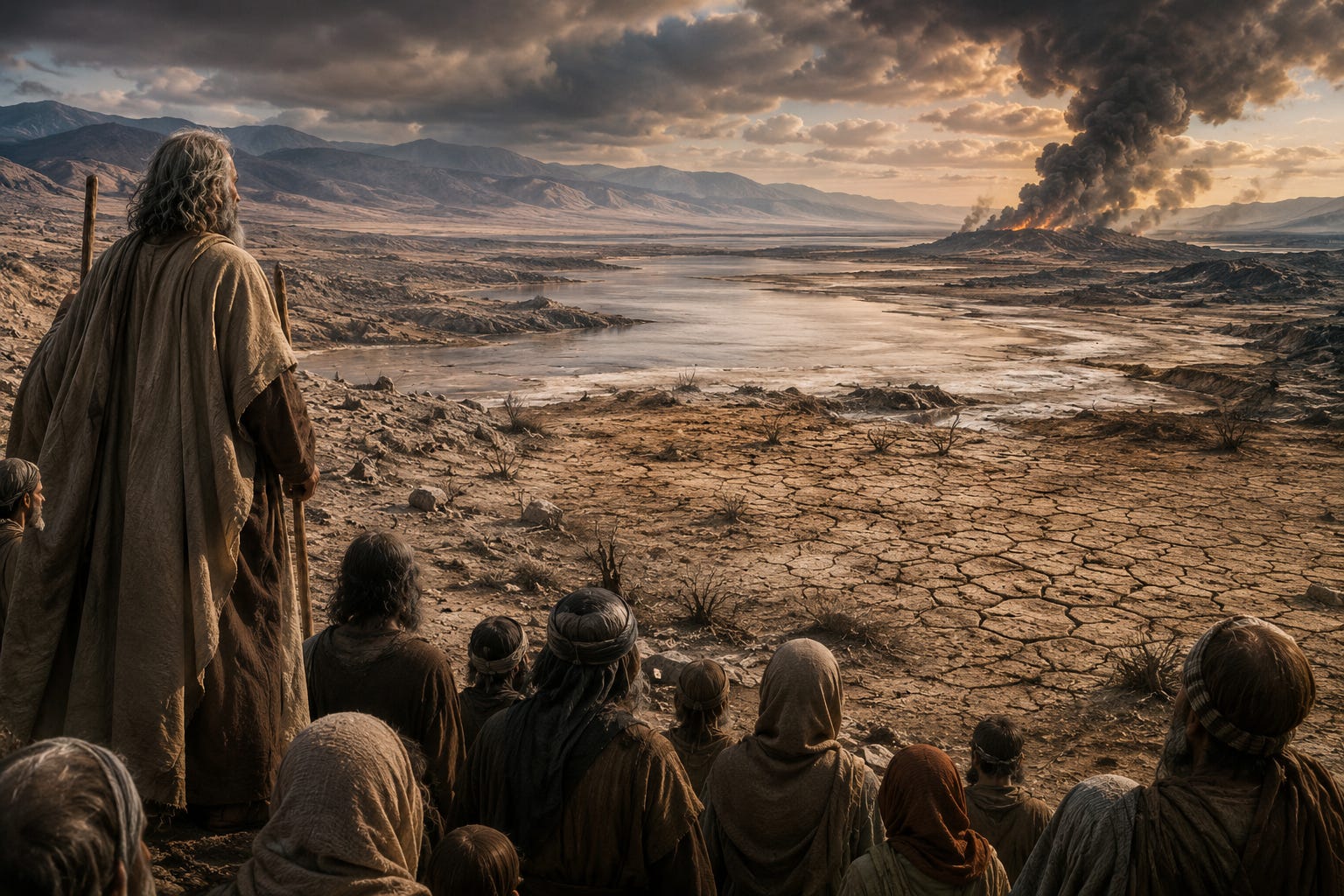
Moses also looks ahead to a generation that will see a very devastated landscape and ask, “Why has Adonai done this to this land? Why this great burning anger?” They see sulfur and salt, scorched earth that cannot be planted, soil that does not sprout and vegetation that will no longer grow. They see drought, famine and starvation. The answer comes: “Because they forsook the covenant of Adonai, the God of their fathers, which He cut with them when He brought them out of the land of Egypt.”
“Forsook” introduces the Hebrew root azav—to leave, abandon, release or let go. Azav and natzav, though not derived from the same root, sound similar, yet within the covenant movement of Deuteronomy they stand in powerful opposition. Natzav describes a people stationed before Adonai; azav describes abandoning the covenantal place in which they had been established.
The result is an uprooting. The people planted in the land are torn from the soil and hurled into another land. The movement has reversed. They crossed over to be established; abandonment will bring displacement.
Reading these words reminds me of the American Southwest during the summer of 2026. More than 95 percent of New Mexico is presently in drought, with large portions suffering Extreme or Exceptional Drought—the designation for the county where I live. Poor snowpack, extraordinary heat, low streamflow and an erratic monsoon have converged into a severe water crisis across the wider Intermountain West.
Eighty-two miles of the Middle Rio Grande have dried up, including stretches through Albuquerque. Elephant Butte, New Mexico’s largest reservoir, has fallen to approximately 1.4 percent of capacity. The town of Estancia near me declared a water emergency as its municipal supply became critically stressed, and water had to be trucked into town. At the end of August, Truth or Consequences temporarily shut off water across the city after a failing pump, low tank levels and a broken main converged into what officials called a “perfect storm.”
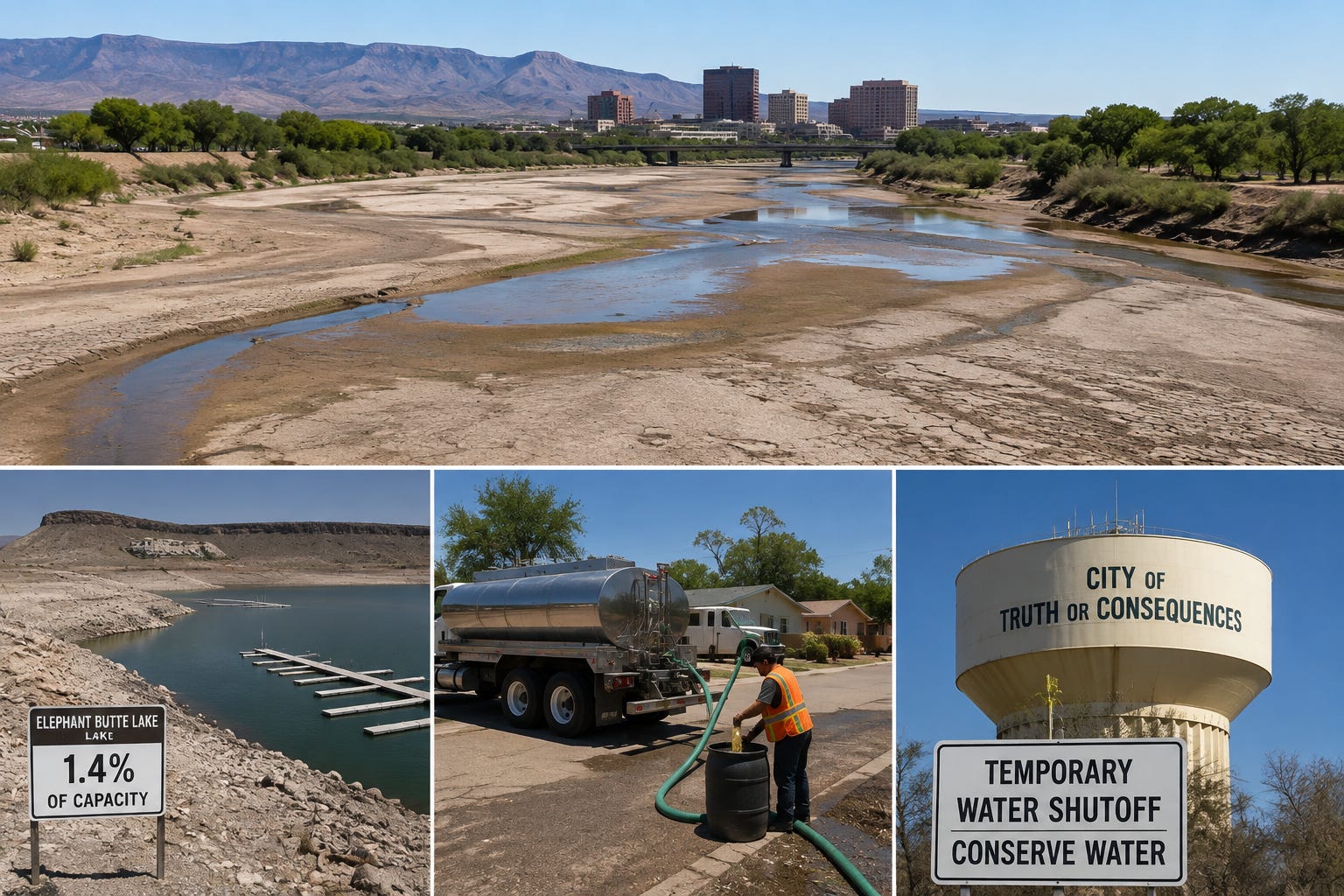
The parched landscape has also become tinder. Months of drought, extreme heat and dry vegetation have created dangerous conditions for wildfires across New Mexico and the Southwest. This summer, the Frijoles Fire alone burned more than 15,000 acres in northern New Mexico. Across the West, drought-stressed forests and grasslands provide abundant fuel, while depleted rivers, reservoirs and wells underscore the scarcity of the very resource needed to sustain the land. Fire has become another visible expression of a landscape desperate for water.
Here in New Mexico, we have also watched storms gather and rain fall all around us while our own ground received almost nothing. One community can remain parched while another only miles away receives a violent downpour. Then, recently, torrential monsoon rains sent a catastrophic flash flood through Bright Angel Creek in the Grand Canyon, killing two people, leaving another missing and destroying trails and bridges. Drought and deluge now occupy the same landscape. Meanwhile, Lake Powell stands around 22 percent full, and Lake Mead has fallen to levels not seen since the reservoir was first filled.
The crisis also carries the weight of decisions accumulated over generations. Leaders have known for decades that reservoirs were declining, groundwater was being depleted, infrastructure was aging and the Colorado River system faced an increasingly precarious future. Preparing for that future required investment in water reuse, infrastructure repair and new sources of supply, including desalination where practical. It required leaders willing to spend political and financial capital for the benefit of future generations. Instead, difficult decisions were repeatedly deferred to another administration, another legislature, another generation.
The road down which the proverbial can has been kicked is ending. The piper has come.
Moses deliberately includes “those who are not here with us today.” Covenant choices move through generations. The way one generation stewards what has been entrusted to it becomes part of the inheritance received by the next. Land, water, institutions and communities all carry forward the accumulated consequences of human choices.
Israel’s covenant is with Adonai. Yet Torah gives us categories through which to understand the world: faithfulness, stewardship and generational responsibility are woven together with land, water and fruitfulness. Actions have consequences, and inheritance carries responsibility.
The people on the plains of Moab are nitzavim—stationed before Adonai. They are called to avar—to pass into covenant and then across the Jordan. Adonai will establish them as His people and plant them in their inheritance. When later generations azav—abandon that covenant—the land itself bears witness to the consequences.
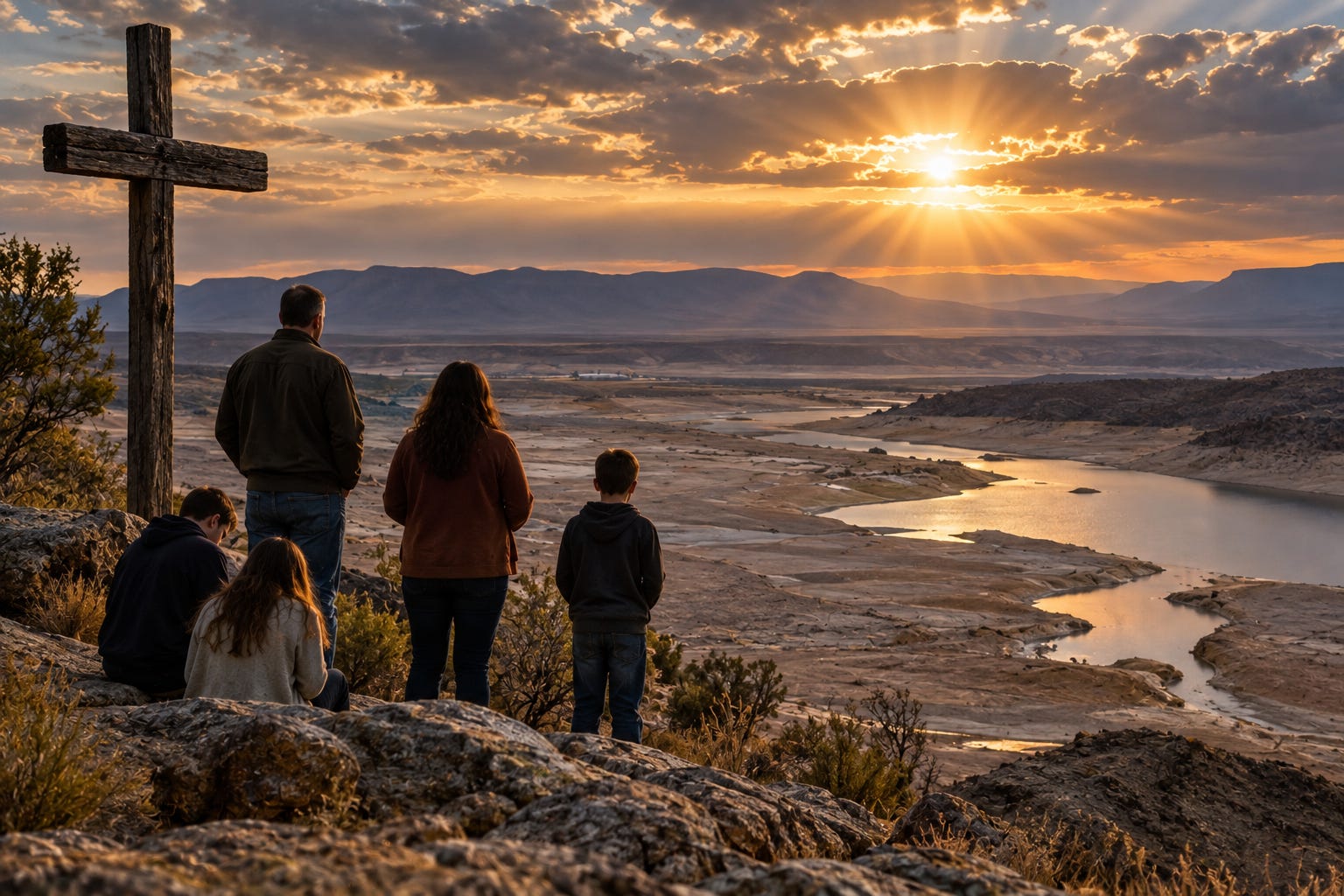
Standing, crossing and returning form a movement. Every generation stands at a threshold, inheriting a world shaped by those who came before and shaping the world that will be handed to those who come after. Moses calls those standing before him to understand where they have been placed, what has been entrusted to them, and what kind of inheritance they will leave to those who are not yet there.
For Dinah’s articles, books, courses, podcasts click on the “start here” button!
The GREATEST EXODUS: A Divine Warrior Tradition
.