When the Barren Woman Sings of War
The book of Samuel opens with Hannah, a barren woman whose anguish becomes the doorway into Israel’s kingship story. Her situation is familiar. She stands in the line of the barren matriarchs—Sarah waiting for Isaac, Rebekah for Jacob and Esau, Rachel for Joseph. Once again, the covenant promise will manifest itself from a womb unable to produce life. Barrenness becomes a place of divine intervention, where God brings forth fruitfulness from emptiness.
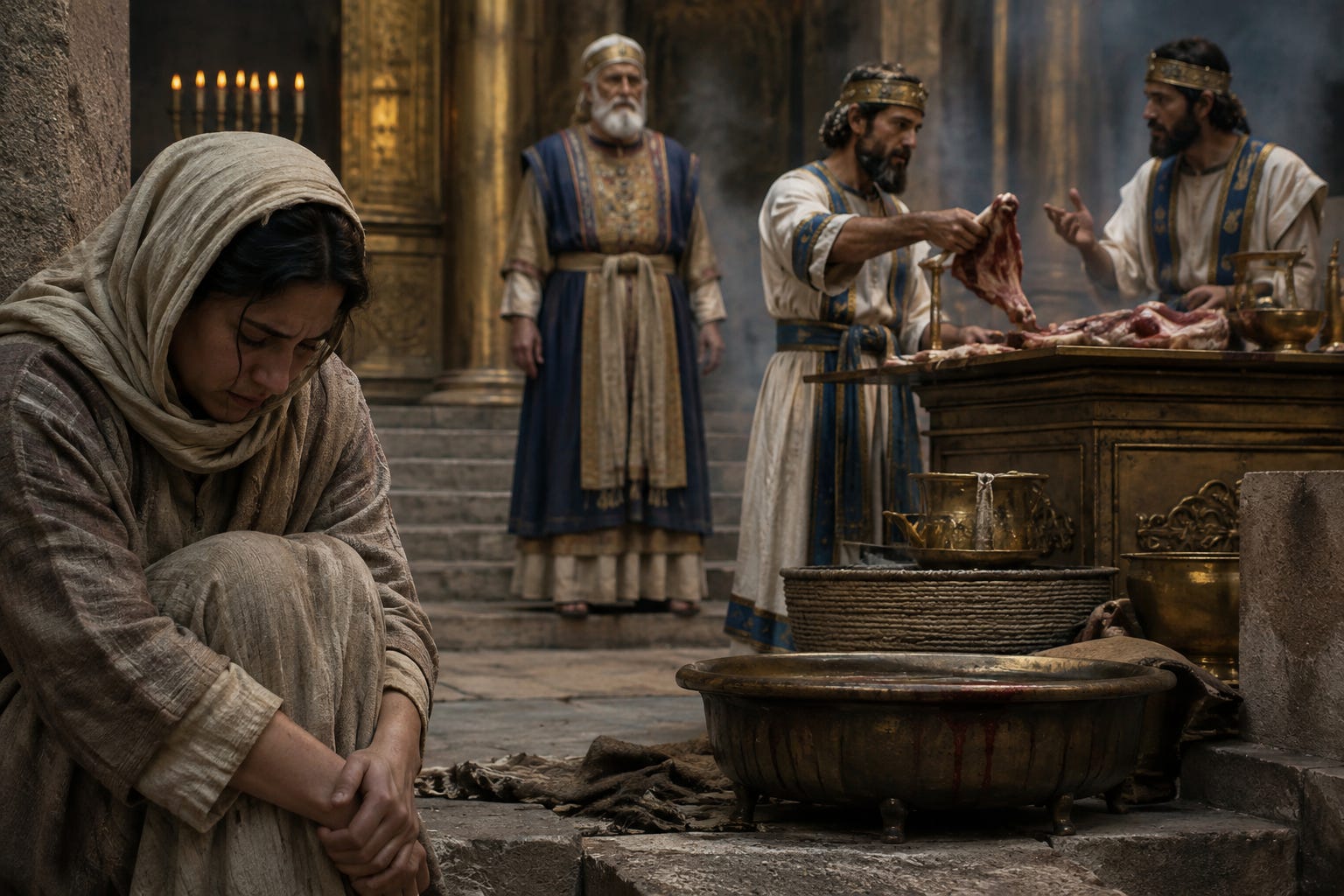
Hannah’s story unfolds during a troubled period in Israel. Each year her husband, Elkanah, travels to Shiloh, Israel’s sacred center, to worship and offer sacrifice. His other wife, Peninnah, has children and torments Hannah over her barrenness. Scripture calls Peninnah her tzarah—her adversary, a word associated with hostility, distress, and affliction. Hannah’s story already carries the contours of Israel’s: an adversary, oppression, a cry for deliverance, and a God who hears.
Her barrenness also reflects the condition of Israel. At Shiloh, the priesthood and sacrificial service continue, yet corruption has taken root. Eli’s sons, Hophni and Phinehas, abuse the sacrificial system and treat the offerings with contempt, while Eli fails to restrain them. It is a dark period when the word of the Lord is rare and visions are uncommon.
Israel is in desperate need of faithful leadership.
Hannah’s womb becomes part of an older biblical pattern. Genesis opens with the earth tohu v’vohu, unformed and empty, awaiting the creative word of God. Yahweh speaks into that emptiness, bringing order, fruitfulness, and new life. Throughout the covenant story, He continues to work in much the same way, bringing life from barren places.
And there may even be a deliberate literary echo in Hannah’s story. Elkanah, her husband is introduced as a descendant of Tohu, a name identical in Hebrew to the tohu of Genesis 1:2—the unformed state of creation before God brings order and life.
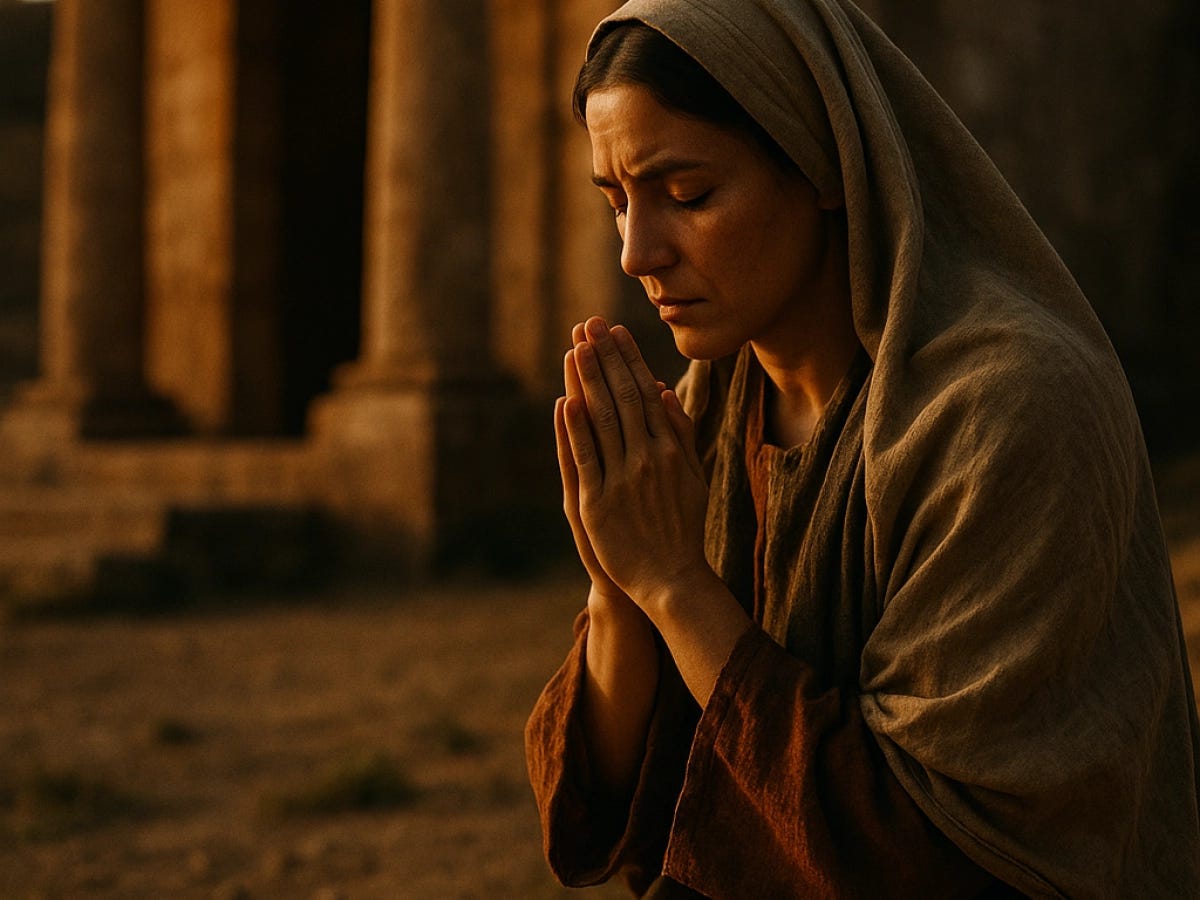
At Shiloh, Hannah carries her distress before God. She weeps, refuses to eat, and finally rises to pray near the entrance of the sanctuary. Her lips move without sound as she pours out her soul before God. Eli watches and concludes she is drunk. His response fits the portrait of Shiloh, where the priest charged with guarding sacred space fails to recognize both the corruption within his own household and the anguish of the faithful woman praying before him. Eli sends her away with a blessing.
She eats, her countenance changes, and the turning point comes: Adonai remembered her.
Divine remembrance signals divine action. God remembered Noah, and the floodwaters began to recede. He remembered Abraham when judgment fell upon the cities of the plain. He heard Israel groaning in Egypt and remembered His covenant with Abraham, Isaac, and Jacob. When Adonai remembers Hannah, her barrenness gives way to life. She conceives and bears Samuel, the child who will become prophet, judge, and kingmaker at this important period in Israel’s history.
When Hannah brings Samuel to Shiloh and dedicates him to Adonai, she sings in the language of battle and divine victory.
Her horn is exalted in Adonai, while the bows of mighty warriors are shattered. Those who stumbled are girded with strength. The satisfied hire themselves out for bread while the hungry are filled. The barren woman bears seven, a number carrying the biblical significance related to the fullness of God’s House. Hannah sees her own reversal in the way God governs. He brings down the powerful, raises the lowly, and creates life where there was none.
Her song belongs within Israel’s Divine Warrior tradition. At the Sea of Reeds, Moses and Israel sang after Adonai shattered Pharaoh’s military power and cast horse and rider into the waters. Deborah sang of Adonai marching forth as the earth trembled and Israel’s enemies fell before Him. Hannah sings in the same way: “The adversaries of Adonai shall be broken to pieces; against them He will thunder in heaven.”
Yet Hannah’s battlefield is her barren womb. Her tzarah, her affliction had tormented her, and the condition she could not change had become the place where Adonai displayed His victory. “Adonai kills and makes alive; He brings down to She’ol and raises up.” The God who opened her womb also rules She’ol. He raises the poor from the dust and lifts the needy from the ash heap to seat them among princes. Hannah’s experience of new life foreshadows the hope of resurrection and enthronement.
Her vision reaches to the foundations of creation: “The pillars of the earth are Adonai’s, and He has set the world upon them.” The woman who came to Shiloh grieving over her womb now sings about the grand ordering of the cosmos.
That brings Hannah to the conclusion of her song: “He will give strength to His king and exalt the horn of His anointed.” But Israel has no king when Hannah sings these words. Yet the first vision of God’s king in Samuel comes from Hannah, and she calls him His mashiach, His anointed one.
The son born to her will anoint David. David will establish his throne in Jerusalem and bring the ark toward the city to become the center of Israel’s worship and kingship. Adonai will covenant with David concerning a royal house and an enduring throne. The road toward Zion and the Davidic kingdom begins with a barren woman pouring out her soul at Shiloh.
Centuries later, another Jewish woman sings from within this same story. Mary’s Magnificat draws deeply from Hannah’s song. God scatters the proud, brings rulers down from their thrones, lifts the humble, fills the hungry, and remembers His covenant promises toward Israel. The life within Mary’s womb signals another decisive act of divine restoration, this time through the Son of David.
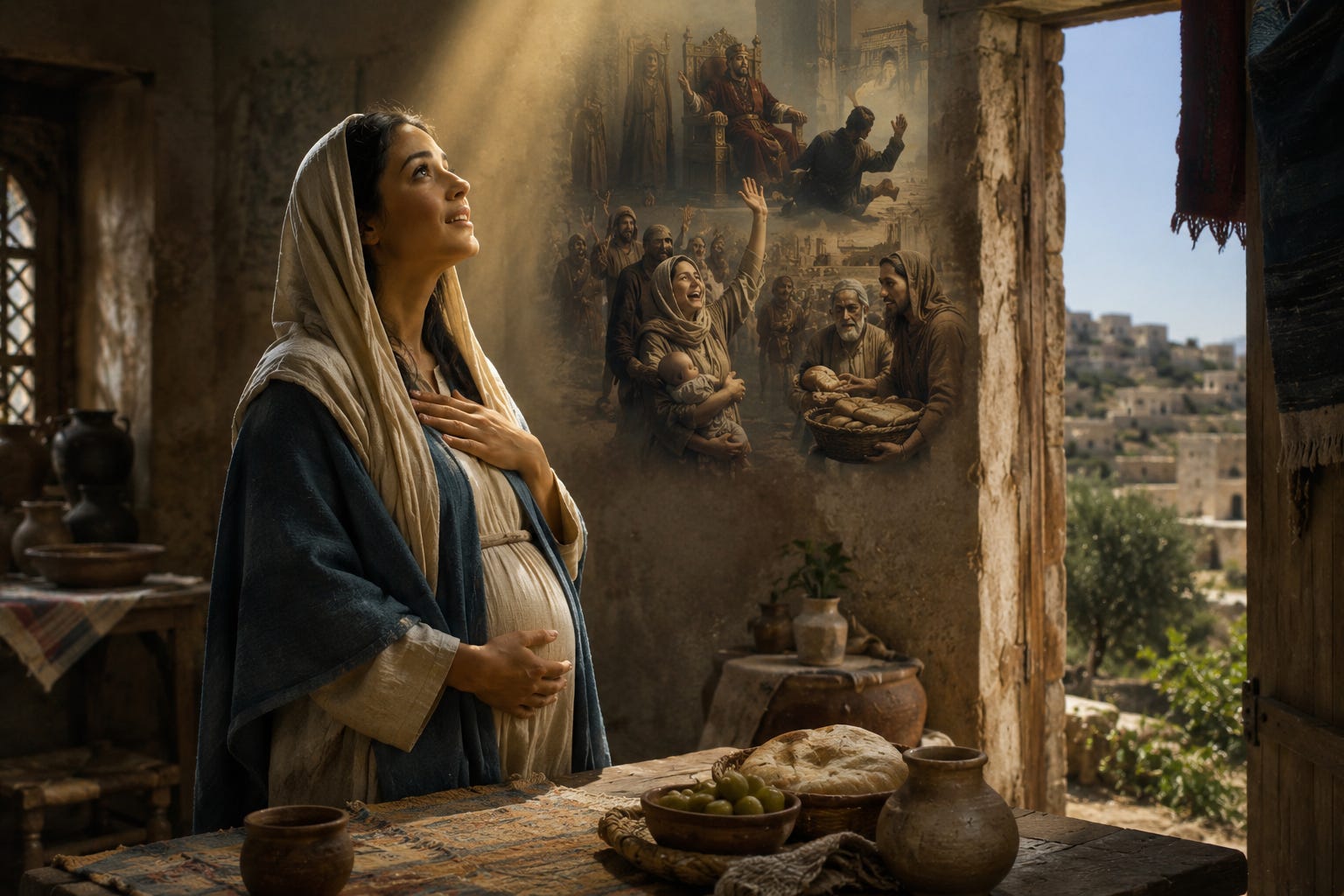
With Jesus, Hannah’s warrior vision reaches its climax. He confronts enemies deeper than Israel’s armies had faced—sin, corruption, exile, the world’s powers, and ultimately death itself. His resurrection reveals the full reach of the victory Hannah glimpsed through the life that came from her barren womb. Her song, born from the anguish of a childless woman, reaches toward the coming King and the restoration of the Kingdom.
Hannah’s story also speaks to those seasons when our own lives seem barren—when our “work” appears unfruitful and unproductive. When the future feels hopeless, or something once alive has become dry and empty. A state of barrenness often convinces us that nothing more can grow. These are precisely the places where Adonai reveals Himself as the God who creates anew. Hannah could not open her own womb, Israel could not restore itself, and humanity cannot raise itself from death. Restoration begins with our God who remembers, acts, and brings life where life seems impossible.
Hannah poured out her soul before Adonai and entrusted her emptiness to Him. Whatever has become barren, weary, or seemingly dead in your own life can be placed into the loving hands of Jesus, the One who entered death itself and came forth alive. We may not know what form restoration will take, or how and when it will come, but we do know the character of the One into whose hands we have placed our lives.
The God who “remembered” Hannah is still the God who “remembers” us.
For access to my books, articles, videos, courses go to “start here” on my website.