In the Beginning: Creation, Liberation, and the Restoration of All Things
Every year, as we begin a new Torah cycle, we return to those familiar words, “In the beginning God created the heavens and the earth.” Most approach Genesis with questions about the origins of the universe. How did God create the world? Were the six days literal? How does the biblical account relate to modern science? These questions have dominated discussions of Genesis for centuries, but they are not necessarily the questions that concerned its ancient audience. For the biblical writers, creation was about much more than the beginning of the physical universe. It was about establishing order, overcoming chaos, and creating a world where life could flourish in the presence of God.
What is often missed is that the biblical creation account also presents a powerful message of liberation. Genesis challenges the religious and political assumptions of the ancient world, particularly those that justified imperial domination and human exploitation.
Creation in the Ancient World
The ancient Near East was filled with creation myths and stories of cosmic battles. These accounts explained how the world came into existence, why suffering and disorder threatened human life, and how divine authority was established and maintained.
Central to these stories was the struggle between order and chaos. Chaos was not simply confusion or disorder. It represented forces that threatened to destroy life and unravel creation itself. Raging seas, destructive storms, famine, disease, invading armies, and oppressive rulers were all understood within this larger cosmic struggle.
The biblical writers employed imagery that radically transformed the meaning of chaos. Genesis opens with the earth described as tohu va-vohu, formless and empty, while darkness covers the face of the deep. The Hebrew word tehom, translated as “deep,” evokes the primordial waters associated with chaos in the ancient world.

Yet the Genesis account contains no cosmic battle between competing deities. Yahweh does not struggle against the sea or defeat a rival god before creation can begin. He simply speaks, and the waters obey. Through His sovereign word, light emerges, boundaries are established, dry land appears, and the world begins to fill with life.
The significance of this account becomes clearer when we recognize that the biblical writers were challenging the dominant worldview of their surrounding cultures. Yahweh is not one god among many, struggling to maintain His position within a divine hierarchy. He is the sovereign Creator whose authority extends over everything that exists.
Creation as Liberation from Empire
The political implications of this account are particularly important. In the ancient Near East, creation stories generally served to legitimize the authority of kings and the imperial systems they governed. The gods established cosmic order, and earthly rulers claimed responsibility for maintaining that order. Political authority was therefore understood as an extension of divine authority.
In the Babylonian creation story, humanity is created to perform labor on behalf of the gods, relieving them of their burdens. This understanding reinforced a hierarchical world in which ordinary people existed primarily to serve the divine and political powers above them.
Genesis presents a dramatically different vision of humanity’s purpose. Rather than creating human beings as servants of competing gods, Yahweh creates humanity in His own image and entrusts them with responsibility for His creation.
“So God created mankind in his own image, in the image of God he created them; male and female he created them” (Genesis 1:27).
In the ancient world, the status of divine image-bearer was commonly associated with kings. Genesis extends this royal dignity to all humanity, male and female alike. Every human being is given a vocation that reflects the authority and character of the Creator.
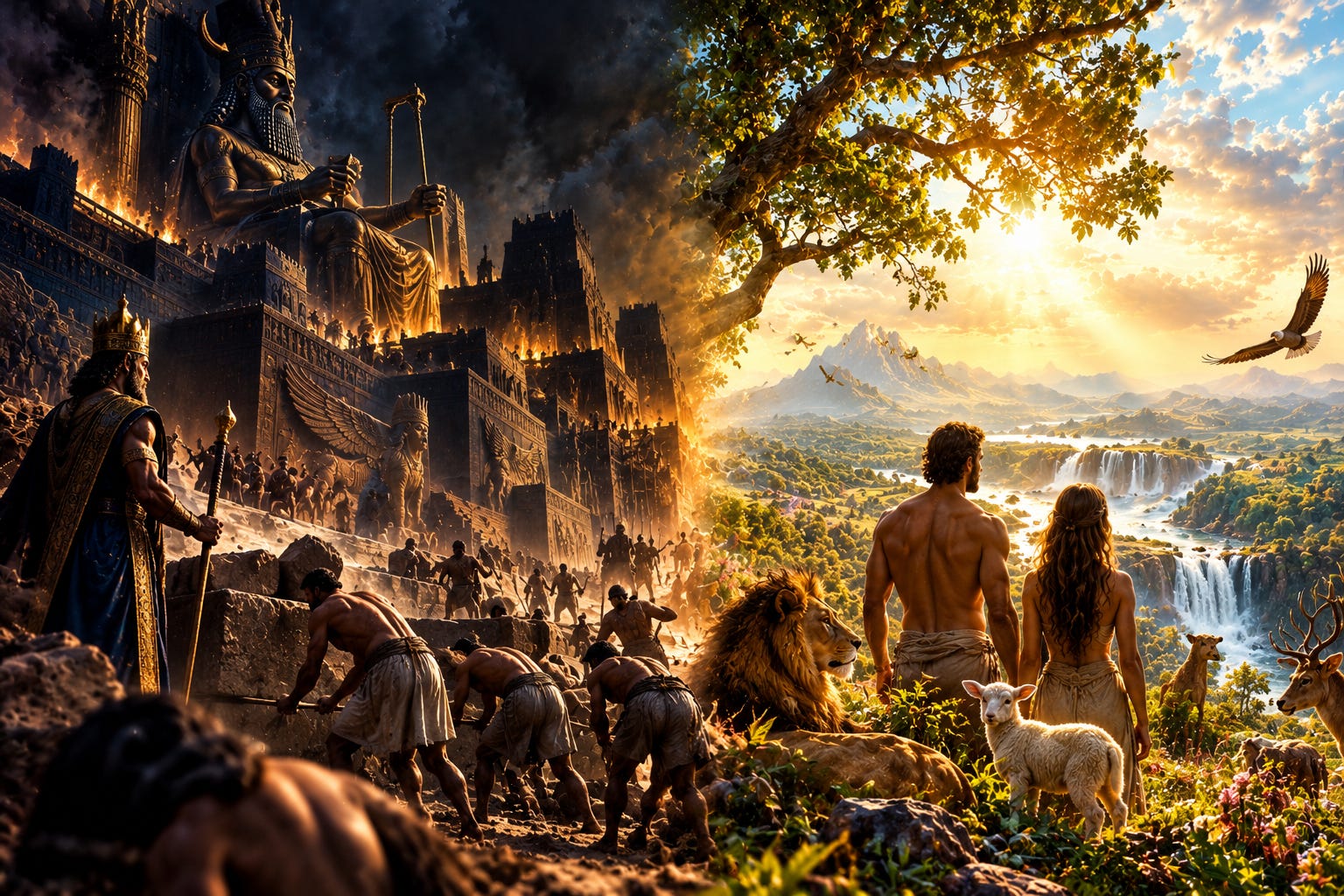
This was a direct challenge to the assumptions of imperial society. Human dignity was not something granted by Pharaoh or the king of Babylon. It was established by God Himself. Humanity was created to exercise dominion, but that authority was intended to reflect God’s life-giving purposes rather than the exploitation and oppression characteristic of earthly empires.
The biblical account therefore presents creation as an act of liberation from the ideological foundations of empire. It challenges the notion that human beings exist merely to serve powerful rulers and declares that they were created for relationship with God, responsible stewardship, and participation in His purposes for the world. This theme of liberation is central to the rest of the Bible.
Creation as God’s Cosmic Temple
Genesis also presents creation as the establishment of God’s cosmic dwelling place. The heavens and earth are organized into an ordered environment where life can flourish and where humanity can live in relationship with its Creator.
God separates light from darkness, waters above from waters below, and sea from dry land. He fills these ordered spaces with living creatures and establishes the rhythms of days, seasons, and years. Each stage contributes to the construction of a world that God repeatedly declares to be tov, good.
The creation account culminates in the seventh day, when God rests. Divine rest should not be understood as recovery from physical exhaustion. In the ancient world, rest was associated with the establishment of stability and sovereign rule. God has completed His cosmic dwelling place and takes up His position as its rightful King.
Within this sacred environment, humanity receives the responsibility to serve and guard what God has established. Genesis 2:15 uses the Hebrew verbs avad and shamar to describe Adam’s vocation in the garden. These same terms later become important in Israel’s priestly service, connecting humanity’s original calling with the work of maintaining sacred space.
This connection helps us understand the purpose of creation. God intended the world to be a place where His presence could dwell among humanity. Human beings were created to participate in maintaining that sacred order through faithful service, worship, and stewardship.
When Creation Becomes De-Creation
Unfortunately, the ordered world of Genesis quickly unravels. The serpent enters the garden, humanity rebels against God’s command, and the harmony between God, humanity, and creation is disrupted. Adam and Eve are expelled from the garden, the ground produces thorns and thistles, and the life-giving work of cultivation becomes painful toil.
The consequences continue to unfold as Cain murders Abel and violence spreads throughout the earth. By Genesis 6, corruption has become so pervasive that the world is moving toward judgment through the waters of the flood.
This reversal of creation is what we might call de-creation. The conditions that supported life and flourishing are progressively undermined by rebellion, violence, and oppression. Throughout Scripture, de-creation takes many forms, including famine, barrenness, slavery, exile, and the destruction of sacred space.
The Exodus as New Creation
The opening chapter of Exodus deliberately echoes the language of Genesis. Exodus 1:7 describes the Israelites as fruitful, multiplying, and filling the land. These are the same Hebrew verbs associated with God’s original blessing upon humanity in Genesis 1:28. The text also employs the word sharatz, describing the Israelites’ abundant increase, recalling the swarming creatures that fill the waters in Genesis 1:20.
Israel is fulfilling the original creation mandate even while living in Egypt. Their multiplication represents the continuation of God’s life-giving purposes through the descendants of Abraham.
Pharaoh, however, sees their fruitfulness as a threat to his political authority. His policies are directed against the very life God is bringing forth. Here we encounter the conflict between creation and de-creation in a historical setting. Pharaoh represents an imperial system determined to control and exploit human life, while Yahweh acts to preserve, deliver, and restore His people.
The Hebrew midwives, Shiphrah and Puah, become agents of creation by protecting newborn children against Pharaoh’s decree. Moses himself is drawn from the waters of the Nile, preserved for the work of deliverance. Eventually, Israel passes through the divided waters of the sea, emerging from slavery into freedom.
The Exodus is more than a political liberation from Egypt. It is a new-creation event in which Yahweh defeats the forces threatening His people and establishes a new identity for them.
The same God who separated the primordial waters in Genesis now separates the waters of the sea to deliver Israel.
The Restoration of All Things
Throughout the biblical narrative. God repeatedly brings life out of circumstances that appear hopeless. Sarah, Rachel, and Hannah conceive after years of barrenness. Israel returns from exile after experiencing the destruction of its land, temple, and national identity. The prophets anticipate a renewed creation in which God’s people will once again dwell securely in His presence.
The creation pattern reaches fullness in the death and resurrection of Yeshua. His resurrection represents the beginning of new creation, demonstrating that even death cannot prevent the fulfillment of God’s redemptive purposes. The liberation that began with Israel’s deliverance from Egypt expands into the promise of freedom from sin, death, and the powers that hold humanity in bondage. The purpose established in Genesis reaches its fulfillment as the relationship between God, humanity, and creation is restored.
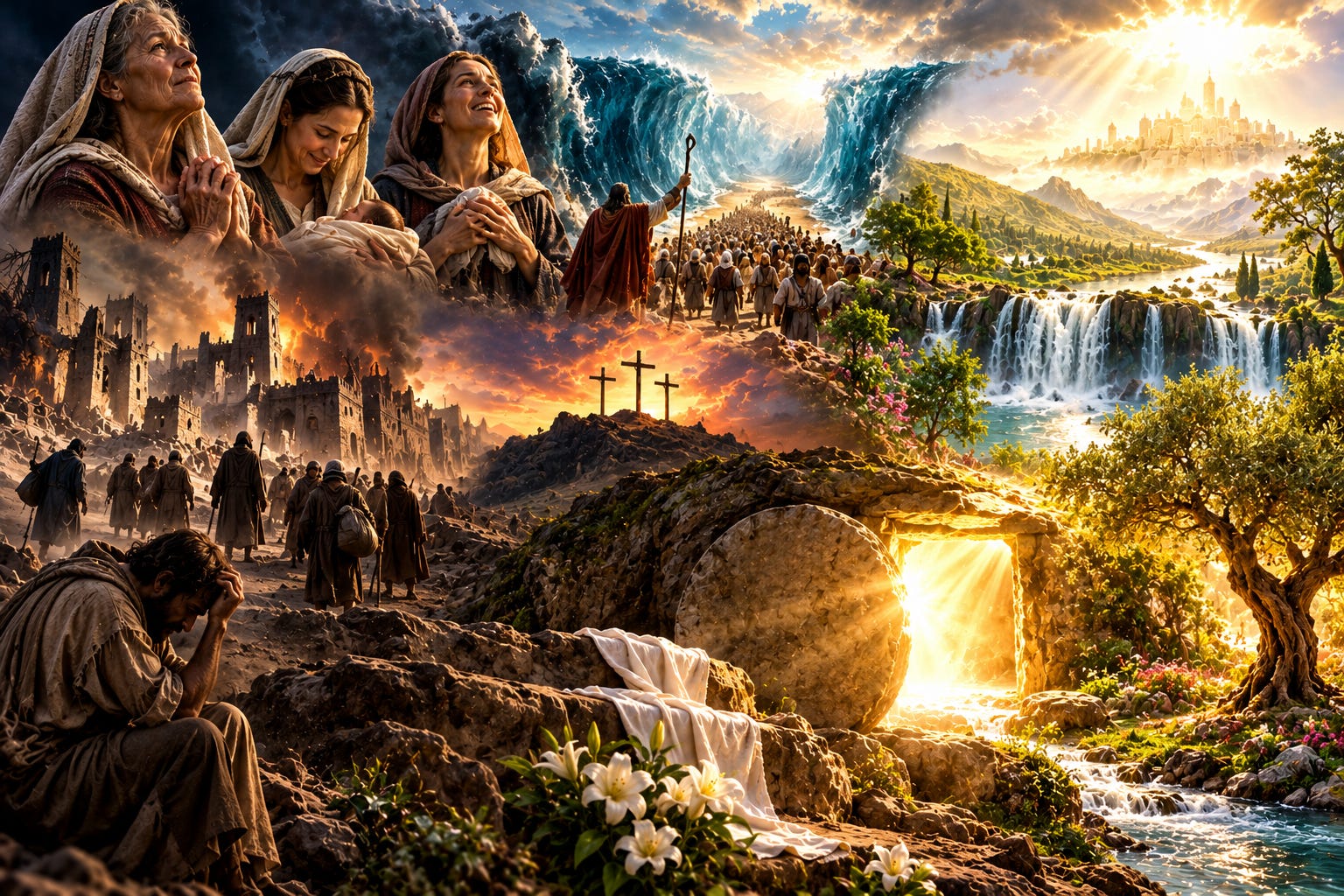
As we begin another Torah cycle, Beresheet invites us to reconsider what it means to live as God’s image-bearers. If creation is fundamentally concerned with establishing life, freedom, and sacred order, then our calling must reflect those same purposes. We are entrusted with protecting life, resisting oppression, caring for creation, and participating in God’s ongoing work of restoration.
The biblical creation account offers a vision of human existence radically different from the systems of domination that have characterized so much of human history. God’s kingdom is established through His life-giving authority, and His people are called to reflect that authority in the world.