Brother Against Brother: Reconciliation is the Path Home to Bethel
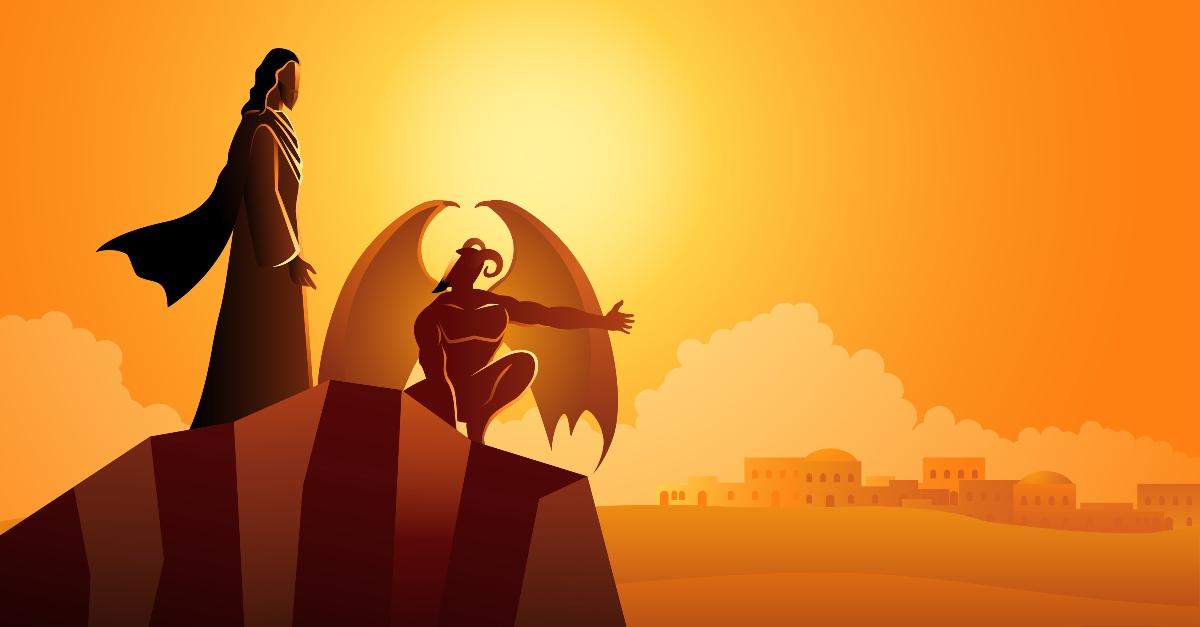
One of the most enduring themes in Scripture is the conflict between brothers. The biblical story repeatedly returns to rivalry, jealousy, wounded honor, and the struggle over inheritance and covenant identity. Cain and Abel. Isaac and Ishmael. Jacob and Esau. Joseph and his brothers. The sons of David. Adonijah and Solomon. And finally, the climactic pattern fulfilled in Yeshua and His own brothers. While these narratives are records of ancient family tension, they also reveal humanity’s continual return to the serpent’s nature introduced in Eden — the desire to seize, dominate, exalt oneself, and secure blessing through rivalry rather than trust.
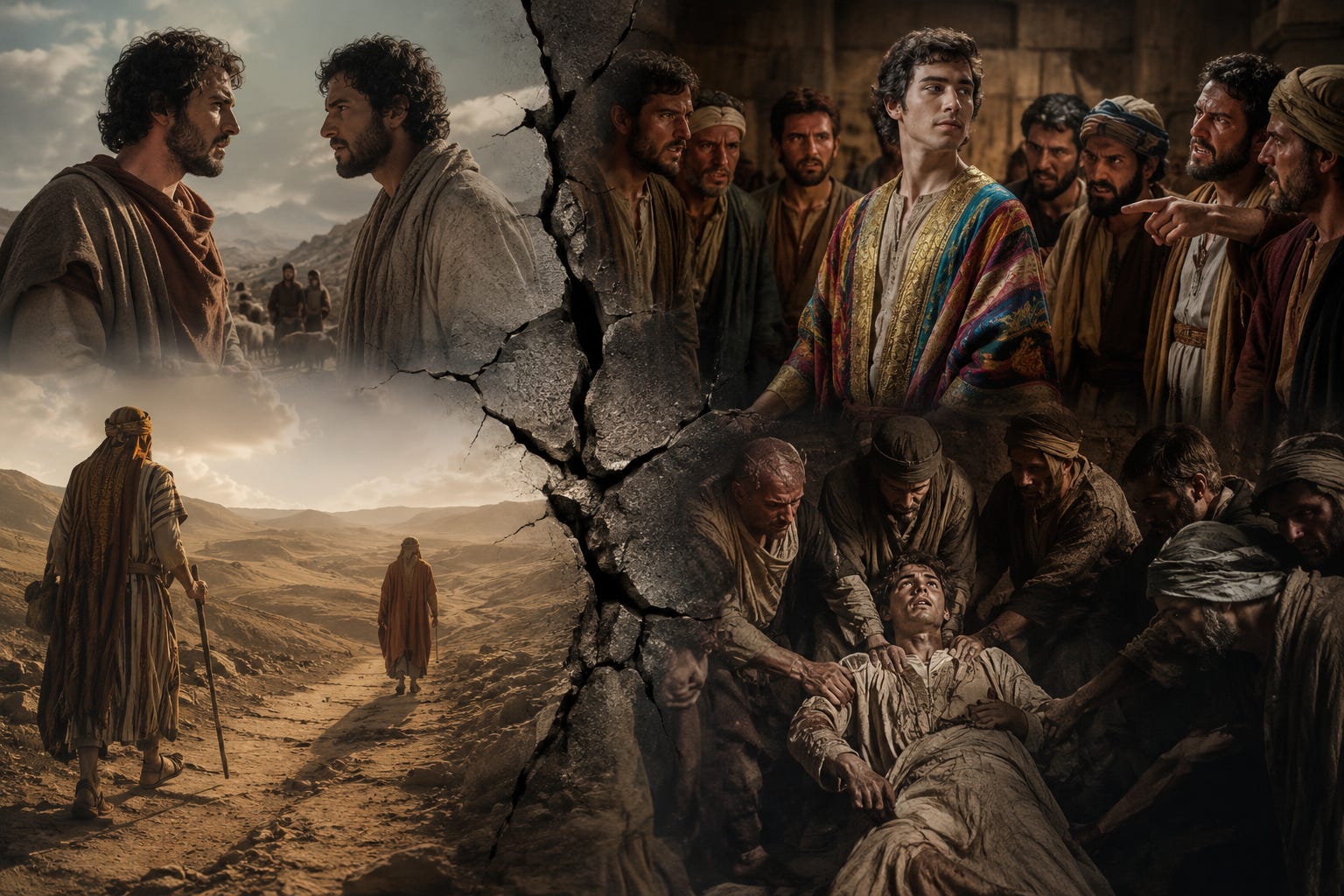
The fracture begins in the garden. Humanity reaches for wisdom apart from God, grasping for what was never meant to be taken by force. That distortion enters the family structure and spreads outward into the human community. Cain murders Abel because of God’s favor shown to him. Ishmael and Isaac compete over covenant inheritance. Jacob and Esau struggle against each other in the womb. Joseph’s brothers cannot bear that God’s favor rest upon him. Again and again, the same fear surfaces: if another is elevated, there will be no blessing left for me.
Scripture presents these brother-conflicts as one of the primary ways chaos enters the world. Rivalry becomes the seedbed of violence, humiliation, and fractured identity. Favoritism breeds resentment. Resentment matures into anger. Anger hardens into murder, conspiracy, rebellion, and the pursuit of power at any cost. The serpent’s whisper continually echoes beneath these stories: Take what should belong to you. Secure your own destiny. Protect your own name.
Yet woven through these conflicts is another theme that slowly emerges— reconciliation. The biblical narrative is not just about rivalry; it moves toward healing rifts. Again and again, God leads broken brothers toward restoration because covenant renewal is not possible while fractures remain.
Nowhere is this pattern more fully presented than in the story of Jacob and Esau.
Jacob’s life begins in the shadow of rivalry. Even in the womb the brothers struggle. Esau emerges first, but Jacob grasps his heel, already reaching for the position of the firstborn. The struggle only intensifies as they grow older. Birthright, paternal blessing, deception, favoritism, and fear shape their family dynamic. Jacob secures inheritance through cunning not trust.
Esau’s anger threatens Jacob’s life, and Jacob flees under the pretense of seeking a wife among his relatives in Padan Aram. His exile, though, begins at Bethel with a stone beneath his head. There, on the future site of Jerusalem’s temple, heaven opens. Jacob sees a stairway joining heaven and earth, with angels ascending and descending upon it. God reaffirms the covenant promises given to Abraham and Isaac: land, offspring, blessing, and the future restoration of the nations.
Bethel becomes the place where exile and promise meet. Jacob anoints the stone, vows allegiance, and continues eastward. But he still leaves Bethel as Jacob —the strategist, the deceiver who carries both covenant promise and unresolved brokenness within himself.
Twenty years pass in Padan-Aram. Jacob marries, builds a household, fathers children, multiplies flocks, and becomes exceedingly fruitful. Yet despite the outward blessing, the unresolved wouns remain. When God finally commands him to return to the land, Jacob understands that return means more than crossing back into the promised land. He must first face Esau.
The journey home therefore becomes a journey toward reconciliation.
Jacob cannot simply re-enter the covenant land while the fracture between brothers is unresolved. Before covenant renewal comes reconciliation. Before restoration comes confrontation with both God and brother.
As Esau approaches with four hundred men, Jacob’s old instincts immediately surface. He divides his household into two camps, calculating survival strategies in case of attack. The old Jacob still thinks in terms of manipulation, preservation, and fear. Yet the night before the meeting, everything changes.
Left alone beside the River Jabbok, Jacob wrestles with a mysterious figure until daybreak.
This wrestling scene stands at the literary and structural center of the entire Bethel narrative. The story begins at Bethel with a stone beneath Jacob’s head and concludes at Bethel with an altar and renewed covenant. Between those two sacred encounters stands the struggle at the river — the hinge upon which Jacob’s entire identity turns.
Nothing outward can truly change until Jacob himself is changed inwardly.
In the darkness beside the river, human strength finally reaches its limit. Jacob wrestles until dawn, refusing to release his opponent until blessing is granted. Yet the blessing comes only through wounding. His hip is struck. His walk is change. He limps away marked forever by the encounter.
Most importantly, he receives a new name. Jacob becomes Israel—one who wrestled with God
The transformation is covenantal. The ongoing rivalry that has dominated his life begins to break. The man who once grasped blessing for himself now walks differently.
Only after this encounter can Jacob truly face Esau.
When the brothers finally meet, Jacob bows seven times before him. The gesture is surprising. The man who once sought superiority now humbles himself before the brother he feared. Yet Esau does not strike him. He runs to him, embraces him, falls upon his neck, and weeps.
Jacob then utters a profound statement: “To see your face is like seeing the face of God, and you have accepted me.”
Jacob had already encountered God at Bethel and wrestled with God at Jabbok. Yet now, in reconciliation with his brother, he perceives something of the divine presence once more. The face he feared becomes the place where grace is revealed.
Only after this healing can Jacob return fully to Bethel. The narrative forms a remarkable literary arc. Jacob leaves Bethel as Jacob; he returns to Bethel as Israel. He departs in exile and fear; he returns in covenant renewal and restored identity.
In Genesis 35, God commands Jacob to build an altar at Bethel. Before ascending the mountain, Jacob calls his household to purification. Foreign gods are removed. Garments are changed. The old loyalties are buried beneath the oak tree. The household undergoes a symbolic cleansing before approaching sacred space once again.
When they arrive at Bethel, Jacob erects an altar and pillar to the God. This time the stone stands upright as a witness to covenant renewal. God reaffirms the name Israel, promises nations and kings, and confirms the covenant inheritance.
Jacob and Esau later reunite to bury their father Isaac together, echoing the earlier reconciliation of Isaac and Ishmael at Abraham’s burial. Once again, former rivals stand side by side in honor rather than hostility. The Bible repeatedly moves toward the healing of fractured brotherhood.
This pattern ultimately reaches its fullest expression in Yeshua and His brothers.
During His earthly ministry, His brothers do not initially believe in Him. They question Him, misunderstand Him, and at times appear embarrassed by Him. Familiarity blinds them. Like Joseph’s brothers before them, they cannot yet recognize the anointed Son of David standing in their midst. They see only a sibling from Nazareth.
But after the resurrection, it all changes.
Paul records that the risen Messiah appeared personally to James. The encounter transforms him. James becomes a pillar of the Jerusalem assembly and eventually leads the council in Acts 15. Jude too becomes a devoted disciple and author within the New Testament witness. The brothers who once doubted now stand within the covenant mission of the Kingdom.
The final brother-conflict narrative in Scripture therefore does not end in murder, exile, or domination. It ends in restoration.
Yeshua becomes the Greater Brother. He does not punish His brothers for their rejection. He does not humiliate them for disbelief. He wins them through love, truth, and resurrection power. And ultimately through Him, all humanity — Jew and Gentile — will become one household under God. Jacob’s return to Bethel sets the pattern by which Scripture teaches reconciliation, covenant renewal and resurrection.
From Bethel to Bethel, Genesis reveals the blueprint: exile, transformation, reconciliation, return. To return to Bethel is to return to Eden — to the sacred mountain, the covenant bond, the presence of God, and key to the healed brotherhood of man.
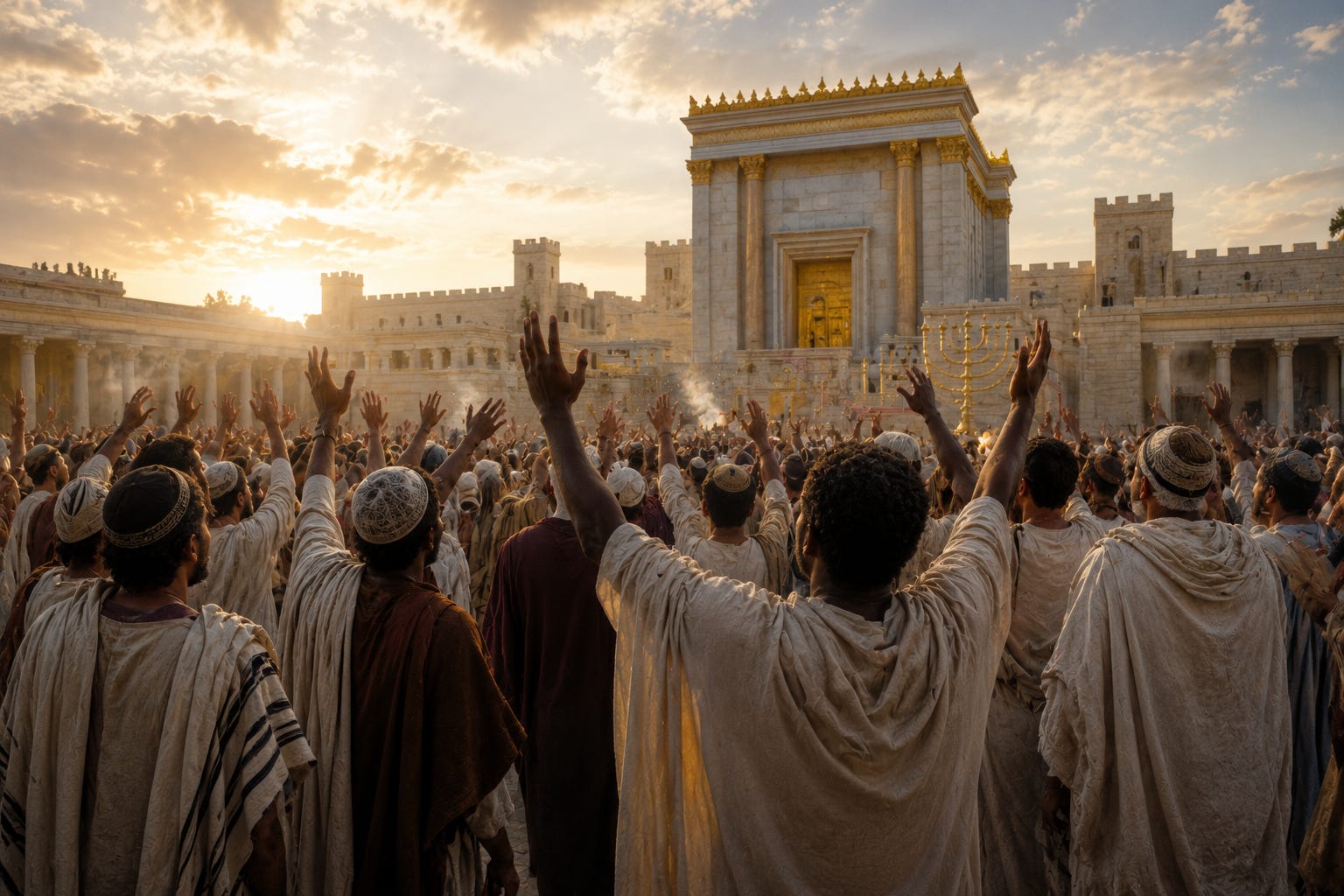
Today, many families remain divided by old wounds, betrayals, political loyalties, inheritance disputes, misunderstandings, pride, or years of silence that harden into permanent estrangement. Friendships fracture. Congregations divide. Siblings stop speaking. Parents and children withdraw from one another. In a culture shaped by the exaltation of self and personal vindication, reconciliation feels impossible.
This does not mean every relationship can be perfectly repaired. Some wounds remain too deep. But covenant people are still called to pursue peace wherever possible. Pride must not be allowed to become permanent exile. The refusal to seek healing leaves fractures in the human family that continue to spread chaos through many generations.
The movement forward is transformation, humility, reconciliation, and return. The covenant bond cannot flourish where resentment is continually nourished. The household of God is restored through repentance, forgiveness, and the very difficult work of reconciliation. Only then can the fractured family begin to resemble once again the dwelling place of God among humanity.