The Streets of Montreal That Forged a Generation
When I heard that an Israeli citizen and member of the Chabad community had been murdered in a mass shooting in Montreal’s Jewish district recently, my thoughts immediately turned to my father.
My dad grew up in Montreal’s Jewish quarter during the 1920s and 1930s, long before the city became the cosmopolitan place people know today. His world was one of Yiddish-speaking immigrants, crowded apartments, kosher bakeries, garment factories, and families trying to build new lives after arriving from Eastern Europe.
My grandmother came from Poland. She was forced into a marriage that did not last. Abandoned by her husband, she raised her children alone with limited means and the help available through the Jewish community and the Canadian government. Tragedy visited the family more than once. Two of her sons died in a fire at a local camp.
My father grew up carrying losses that would shape him for the rest of his life.
When people speak of Montreal’s Jewish neighborhoods, they often remember the culture, the food, the language, and the sense of community. Those memories are true. But there was another side to the story. Many families struggled simply to survive.
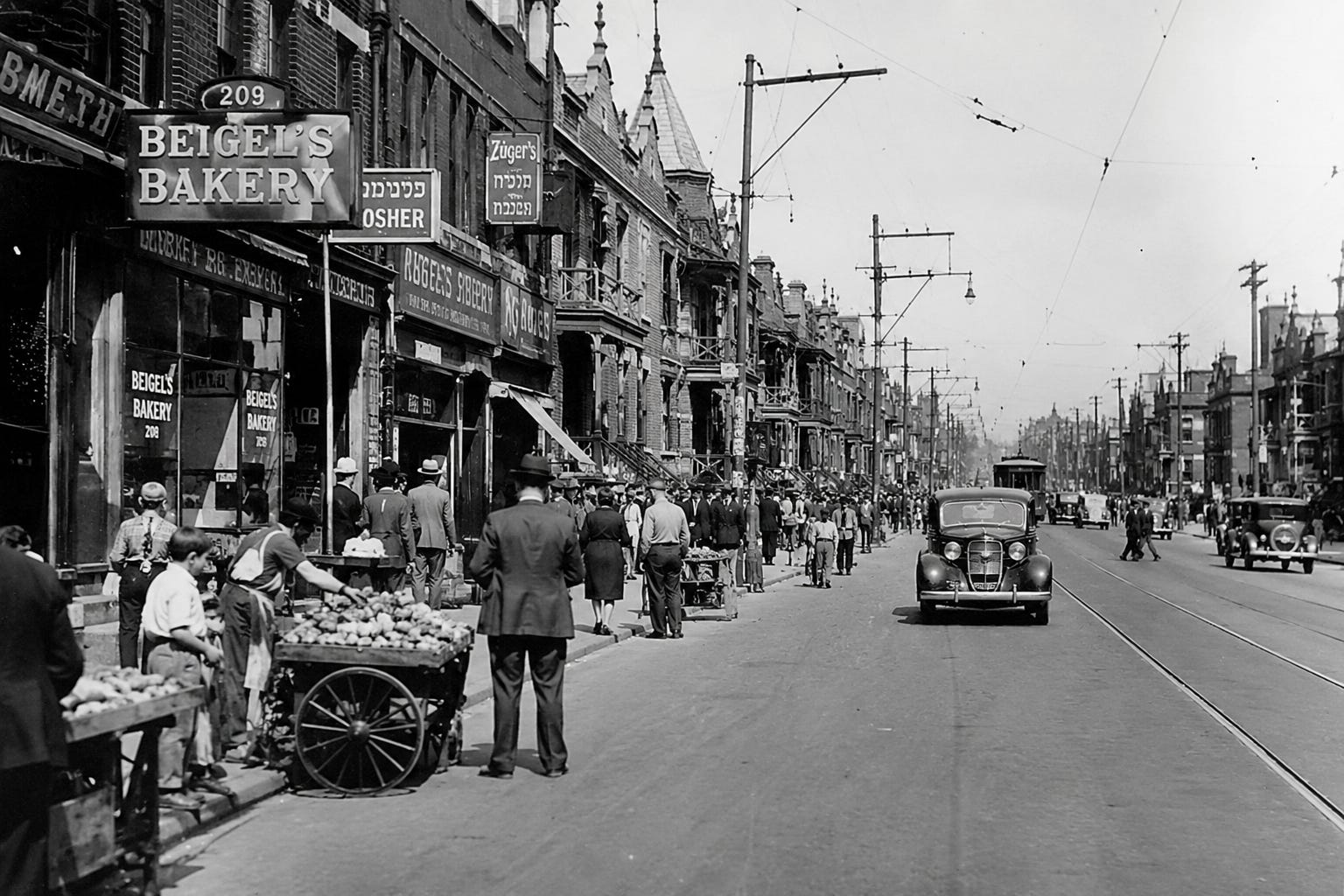
The neighborhood where my father grew up was centered around Saint-Laurent Boulevard—known locally as “The Main”—and streets such as Saint Urbain. It was home to thousands of Jewish immigrants from Poland, Russia, Lithuania, Ukraine, and other parts of Eastern Europe. They had left behind poverty, persecution, and uncertainty in the Old World and were now trying to build a future in Canada.
The streets were crowded and full of life. Brick duplexes and triplexes lined the blocks, their distinctive exterior staircases winding upward from the sidewalks. Families lived in modest apartments above shops and businesses. Pushcarts rolled down the streets selling vegetables, fish, fruit, and bread. Children darted between shoppers carrying parcels home from the market.
Shop signs in Yiddish hung above bakeries, butcher shops, and small businesses. The aroma of fresh rye bread drifted from neighborhood bakeries. Barrels of pickles stood near delicatessens. Smoked fish, chicken soup, and freshly baked challah were familiar scents. In winter, coal smoke lingered in the cold air, mingling with the steam rising from streetcars rattling along Saint-Laurent Boulevard.
The language of the neighborhood could be heard everywhere—in homes, shops, and conversations between neighbors leaning from windows. Children moved between worlds—speaking Yiddish at home, English at school, and occasionally French in the broader city. The neighborhood was a transplanted piece of Eastern Europe where old customs and traditions remained part of daily life.
Yet beneath the energy of the neighborhood lay hardship. Families crowded into small apartments where privacy was a luxury. During the Depression years, every dollar mattered and children often contributed to the household income as soon as they were old enough to work. Despite these challenges, synagogues, schools, charitable organizations, and aid societies formed a network of support that helped families endure difficult times.
My father, Saul, grew up in this world during the hard years of the Great Depression.
On winter mornings he descended the icy exterior staircase of the family apartment and stepped into the bitter Montreal cold. Snowbanks lined the streets. Coal smoke drifted through the air. Streetcars rattled along Saint-Laurent Boulevard carrying workers to factories and shops. Like many boys in the neighborhood, Saul walked to school wearing clothes that were patched and repaired. Shoes were re-soled, coats were handed down, nothing was wasted.
The Depression left its mark on every family in the neighborhood, and Saul’s family was no exception. With his father absent and his mother struggling to support the household, childhood ended early. After completing Grade 8, he left school and entered the world of work, and helped carry the responsibilities of the family long before he reached adulthood.
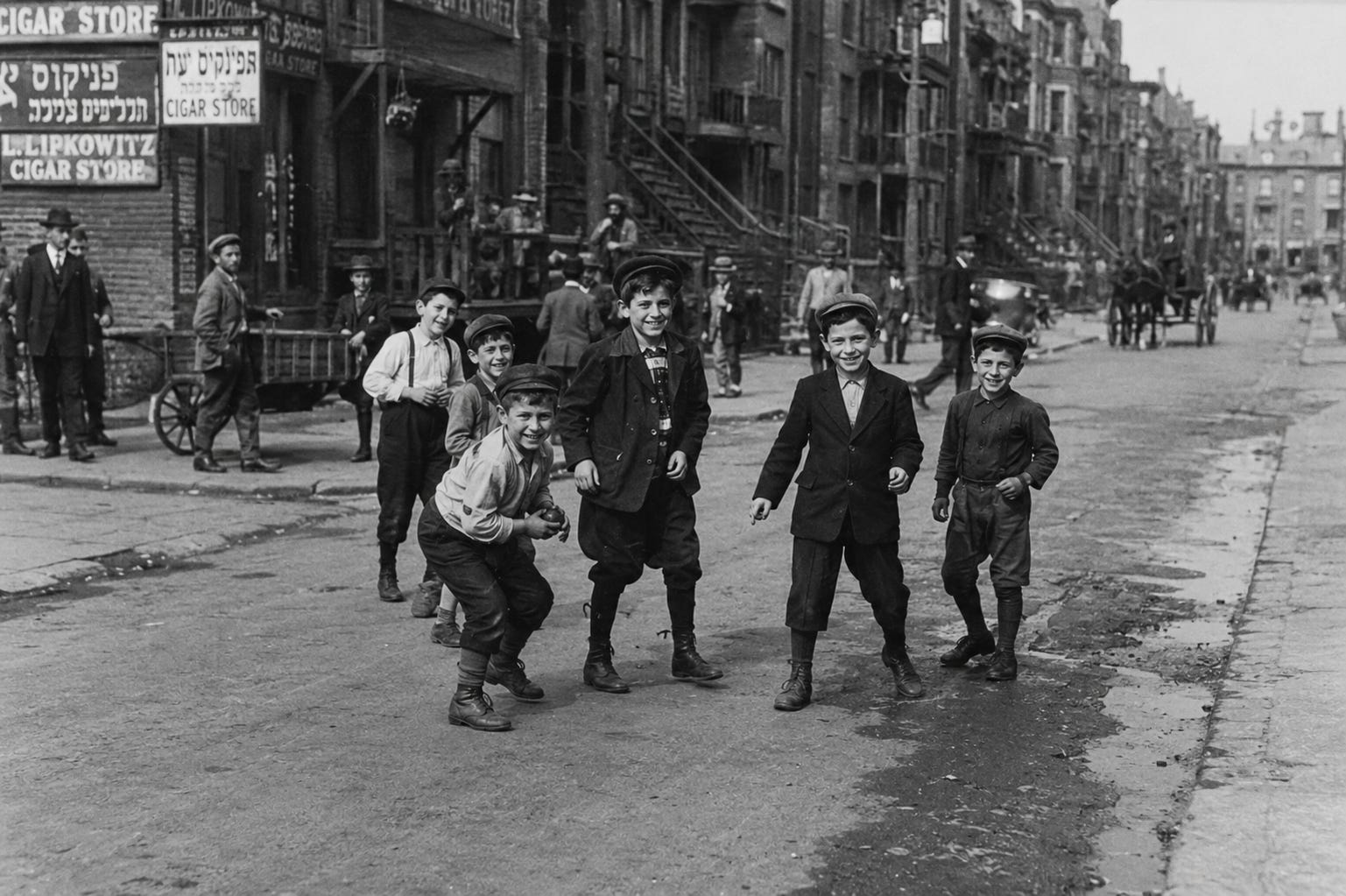
Growing up Jewish in Montreal carried other challenges. Antisemitism was not an abstract idea discussed in newspapers; it was encountered daily on the street, in schoolyards, and in everyday life. My father was beaten up more than once simply because he was Jewish. He was hardly alone. He learned early that there were places where he was accepted and places where he was not.
The Montreal of my father’s childhood no longer exists. The Yiddish signs have long disappeared. The immigrant generation that built the neighborhood has passed from the scene. The memory of that world remains though. Its stories survive in photographs, family memories, and the lives of those who inherited its values.
When I heard of the recent mass shooting that struck Montreal’s Jewish community, my thoughts returned to that earlier generation. I found myself thinking about my dad, Saul. I thought of a boy walking those streets through the snow, speaking Yiddish at home and English at school, helping his mother make ends meet, enduring loss, and learning to navigate a world that was not always welcoming to Jews. I thought of the thousands of immigrant families who arrived with little more than hope and determination and somehow built lives, communities, businesses, schools, and synagogues for the generations that followed.
That neighborhood produced people who learned to endure. They endured poverty, discrimination, family tragedy, and uncertainty, yet continued to move forward. They raised families, built communities, fought in wars, and helped shape the countries that became their homes.
My father carried that inheritance with him throughout his life. His strength was formed in the kitchens, streets, schools, and synagogues of Montreal’s Jewish quarter before he ever put on a military uniform.
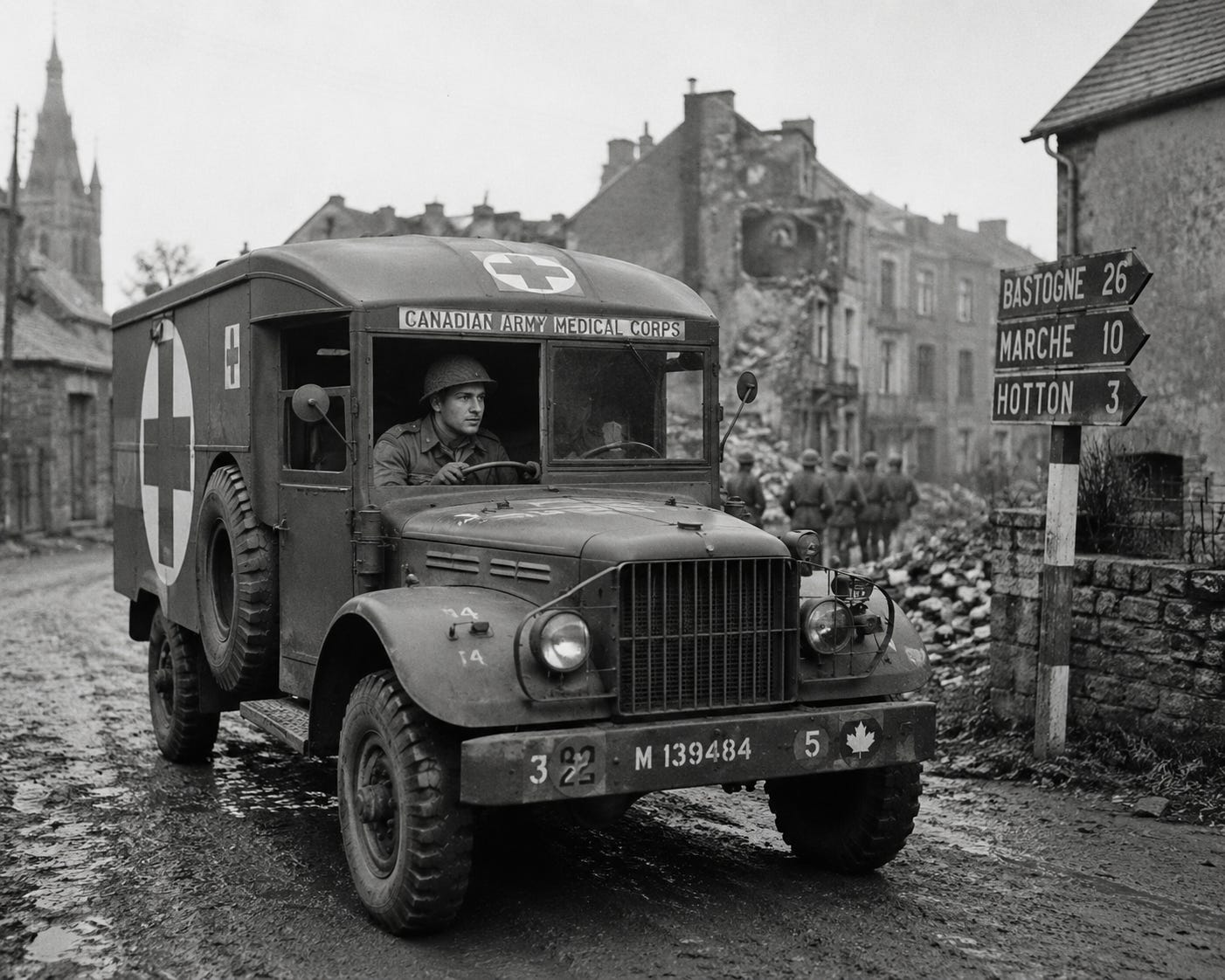
That resilience would accompany him far beyond those neighborhood streets. As a young man he joined the Canadian Armed Forces and served during the Second World War, taking part in the evacuation at Dunkirk, the Italian campaign, driving ambulances in Belgium, and participating in the liberation of Holland. The courage and determination that sustained him during those years had been forged much earlier in a neighborhood of immigrants and in a household marked by hardship.
The legacy of that neighborhood did not end with his generation. In many ways, it found its way into my own life. I encountered my share of antisemitism growing up. And as a woman pursuing biblical studies and writing in spaces mostly dominated by men, I faced many obstacles, disappointments, and more than a few closed doors. But I have not quit. The example of my father, and of the generations that came before him, taught me that perseverance matters more than recognition.
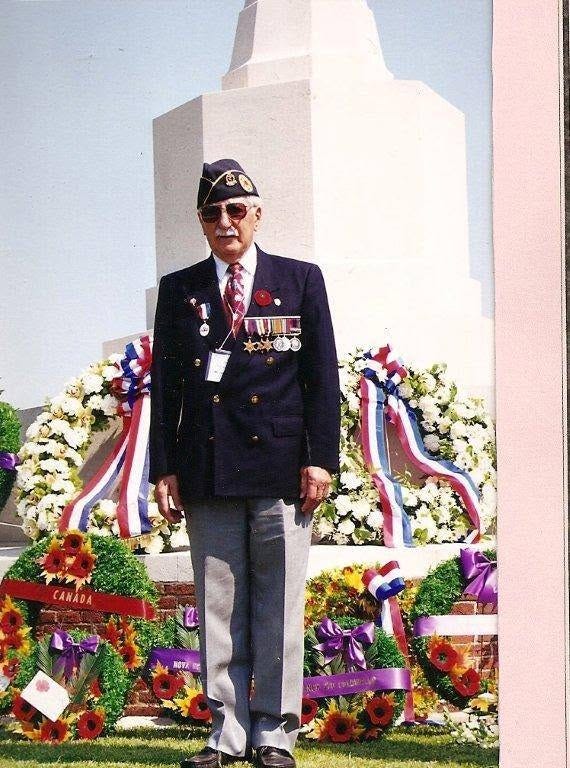
The news out of Montreal affected me because it reminded me that every Jewish community is built upon lives marked by struggle, loss, and persistence. My father’s generation lived that reality. Their world was one of courage, faith, and determination to build a future despite hardship. Remembering them is more than an exercise in history. It is a reminder that communities are built by ordinary people who refuse to surrender to adversity and who continue, against the odds, to begin again. As we face the challenges of our own day, their example reminds us that we endure hardship best when we build strong communities and care for one another.