The Wilderness That Remembered
The book of Deuteronomy opens with Moses looking back over Israel’s forty years in the wilderness. Before he gives Israel new instruction, he reminds them where they’ve been.
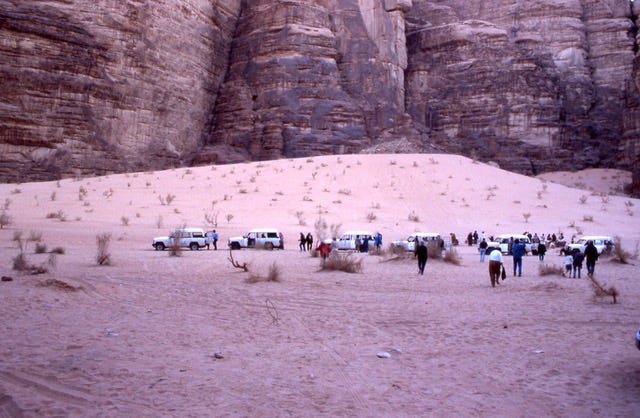
Years ago, I had the privilege of following much of that same route through modern Jordan on a rugged jeep tour. Fortunately, it didn’t take me forty years, or I’d probably still be trying to cross back into Israel!
“It is eleven days’ journey from Horeb by way of Mount Seir to Kadesh-barnea… In the fortieth year… Moses began to explain this Torah.” (Deut. 1:2–5)
Most of us begin reading Deuteronomy and quickly stumble over an unfamiliar list of names. Horeb. Kadesh-Barnea. Mount Seir. The Arabah. Wadi Zered. The Arnon. Moab.
They seem like little more than ancient geography, the sort of details we skim on our way to the “important” parts of Moses’ final speech. But Moses wasn’t giving Israel a geography lesson. He was telling a story—a story of their history.
Our journey through Jordan traced much of Israel’s final wilderness route. We traveled through the Arabah, explored Petra, crossed the Zered Valley, descended into the magnificent Arnon Gorge, climbed Mount Nebo, and eventually stood overlooking the Jordan Valley. Suddenly those names in Deuteronomy were no longer dots on an ancient map. They were no longer just names on the pages of my Bible. They had become real places I had seen with my own eyes.
The first thing that struck me was the Arabah itself. It is difficult to describe just how barren this landscape is. Stretching south toward the Gulf of Aqaba, it is one of the driest regions in the Near East, receiving little more than half an inch of rain each year. I remember looking across miles and miles of desert and seeing almost nothing alive. A few scattered acacia trees struggled against the relentless heat. Rocks stretched to the horizon. The silence was almost overwhelming. It was a thirsty, parched land.
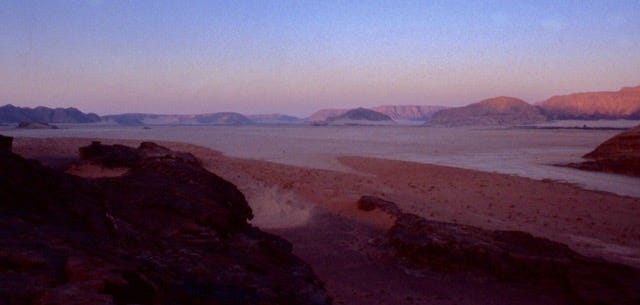
Yet it is precisely this landscape that Isaiah speaks of regarding God’s promises:
“The desert and the dry land shall be glad; the Arabah shall rejoice and blossom like the crocus… For waters shall break forth in the wilderness, and streams in the desert.” (Isaiah 35:1, 6)
The place of desolation will become the place of restoration.
Continuing north, we crossed Wadi Zered, the valley Moses mentions in Deuteronomy 2. In biblical times it formed the boundary between Edom and Moab. Moses reminds the people that by the time they crossed the Zered, the generation that had refused to trust God at Kadesh-Barnea had passed away. The crossing marked the end of one chapter in Israel’s history and the beginning of another.
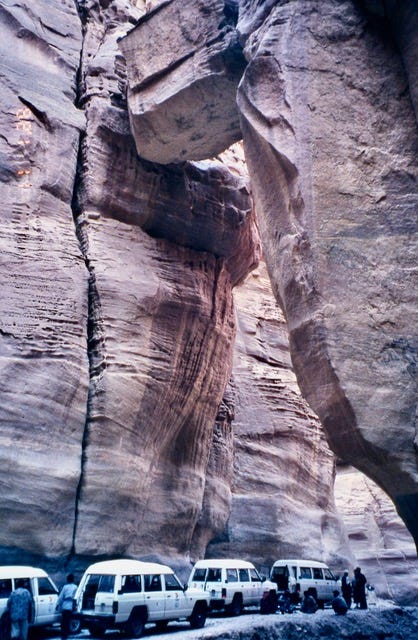
Not long afterward we descended into the spectacular Arnon Gorge. The Arnon is far more than a river. It cuts through the plateau of Moab in a canyon nearly 1,700 feet deep in places. Standing there, the biblical description of a “rushing torrent” suddenly made perfect sense. A canopy of rock hovered above us. As our convoy of white jeeps slowly wound its way through the valley, I understood why this place remained etched in Israel’s memory. Beyond it lay new enemies, new victories, and the first steps toward the Promised Land.
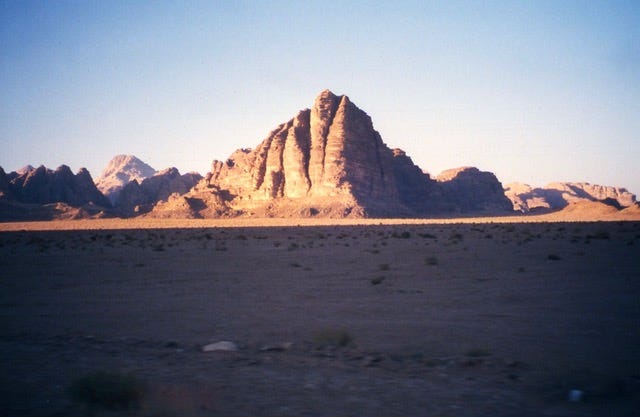
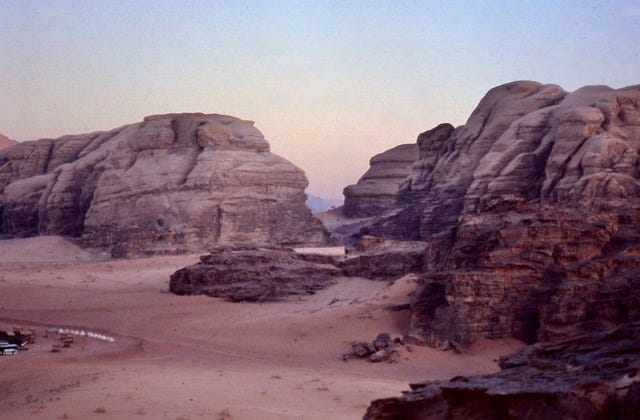
Not every location mentioned in Deuteronomy can be identified with certainty. Wadi Rum, for example, has been suggested by some scholars as a possible location for Kadesh-Barnea because of its immense size and natural water reservoirs hidden beneath its sandstone formations. It resembles a vast sand ocean. Whether that ultimately proves correct or not, standing in that vast wilderness helps one appreciate the scale of Israel’s encampment.
Wadi Rum is also forever linked with one of history’s most famous adventurers, T. E. Lawrence—better known as Lawrence of Arabia. During the Arab Revolt of 1917–1918, Lawrence crossed these deserts while helping lead Arab forces against the Ottoman Empire.
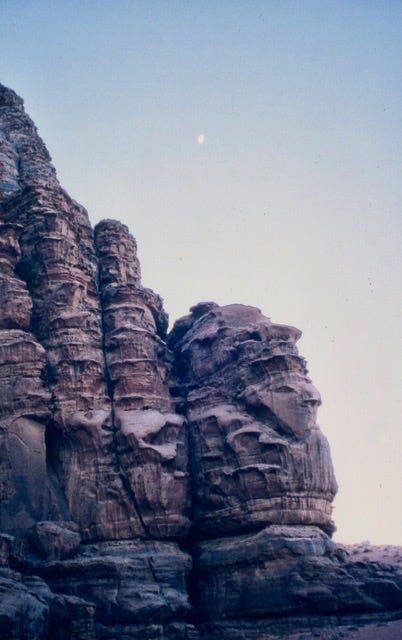
One of Wadi Rum’s towering sandstone formations now bears the name The Seven Pillars of Wisdom which inspired the title of Lawrence’s famous memoir. It is easy to understand why filmmakers have repeatedly chosen Wadi Rum to portray the moon, Mars, and otherworldly landscapes. This is a place of dramatic beauty—a wilderness that formed part of the landscape through which God prepared His covenant people to enter the Promised Land.
That may be the greatest lesson of Deuteronomy. Moses is reminding Israel what God did in those places. Horeb speaks of covenant. Kadesh-Barnea reminds them of unbelief. Zered marks the passing of one generation. The Arnon announces that God is leading His people forward once again. Moab becomes the place where Moses prepares the nation for life beyond the wilderness.
Moses also reminds Israel of the formidable peoples they encountered along the way—the Emim, the Anakim, the Rephaim, and Og king of Bashan. These “giants” had once filled Israel with fear. Forty years earlier the spies looked upon the Anakim and confessed, “We seemed like grasshoppers in our own eyes.”
Yet by the time Moses spoke these words, many of those once-feared enemies had already fallen. Their size had not determined the outcome. God’s faithfulness had. Every giant Israel dreaded became another testimony that nothing standing in the way of God’s covenant purposes was beyond His power to overcome.
That is why Deuteronomy begins with geography before it gives commands. Before Israel receives instruction, Moses reminds them of the road they have traveled with God. Yes, the wilderness was about reaching Canaan but perhaps more importantly it was about forming a people.
Standing among those valleys and mountains years later, I realized the landscape itself was part of Israel’s testimony.
Our own lives are not so different.
Like Israel, we are often tempted to measure the size of the obstacle instead of the greatness of the God who goes before us. Deuteronomy reminds us that every wilderness contains giants, but it also reminds us that God has never abandoned His people along the journey.
We all have our Horebs and Kadesh-Barneas, our Zereds and Arnons—places where God met us, corrected us, carried us, and prepared us for what lay ahead.